7 Powerful Tips: Seated Row Weight Machine
Quick Answer
A seated row weight machine helps you build a stronger back, mainly the lats, rhomboids, and traps, and it also works your biceps and rear delts. To get the most from it, make sure it fits your body, choose a weight you can control, keep your upper body steady, and pull the handles toward you with smooth, controlled reps.
The 7 tips below will help beginners improve their form, avoid common mistakes, and build a more effective back workout.
Key Takeaways
• Adjust the seat and foot supports so you can reach the handles with a straight back.
• Start with a weight you can control, and work on your form before adding more.
• Keep your upper body steady and your shoulders relaxed on every rep.
• Pull with your elbows, not just your hands and arms.
• Return the weight slowly. Do not let the machine pull your arms forward.
• Choose a grip that feels comfortable and suits your machine.
• Add resistance slowly as your strength and control improve.
What Is a Seated Row Weight Machine?
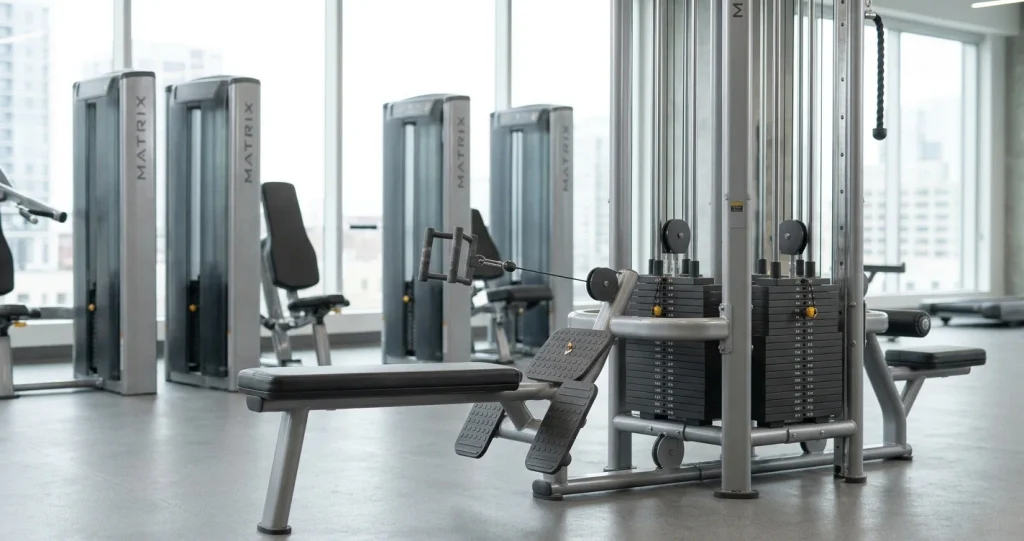
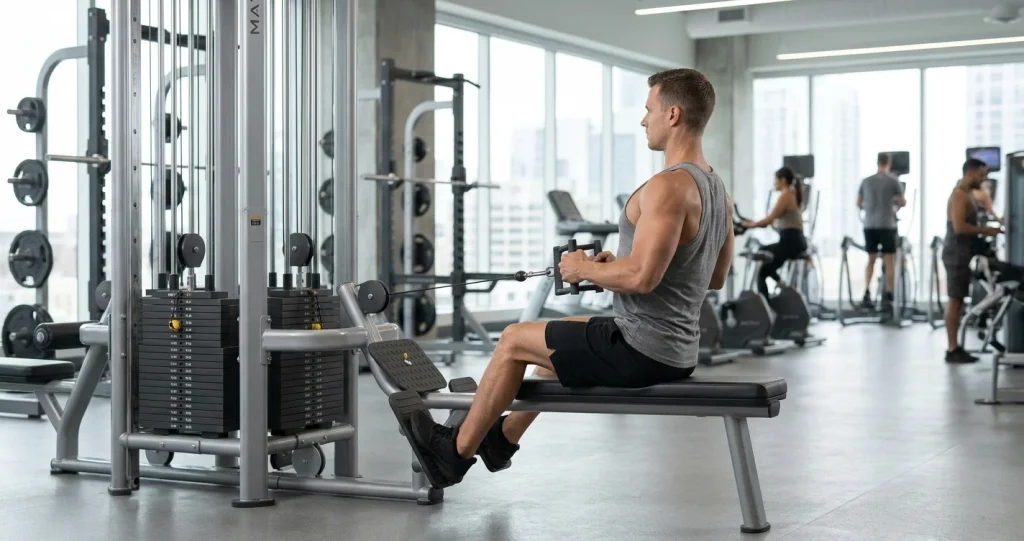
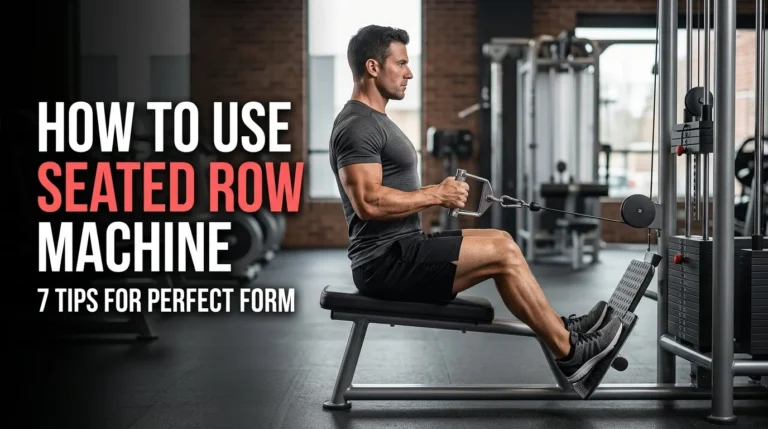
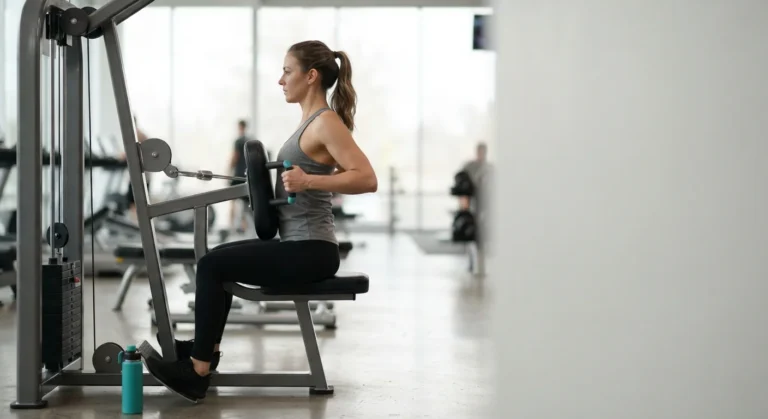
A seated row weight machine is strength-training equipment that lets you work your back with a horizontal pulling movement. Most use a weight stack, a cable and pulley system, or weight plates. Many have a chest pad, while others have no pad, so you must keep your upper body steady yourself.
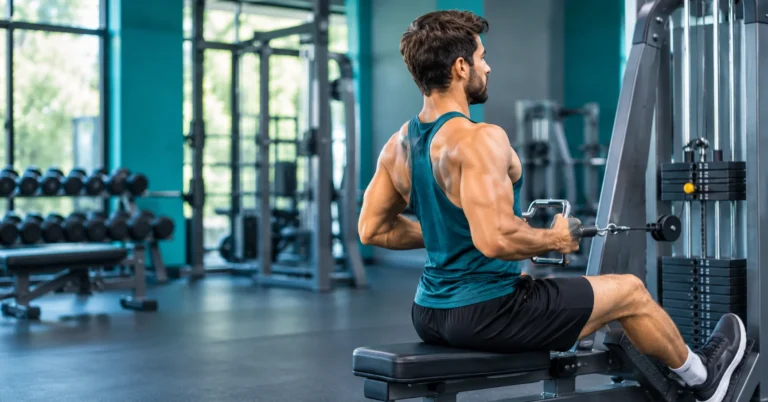
You sit down, place your feet on the supports (if there are any), hold the handles, and pull them toward your body. Then you slowly let them return to the start.
The exercise works many of the muscles you use to pull your arms backward. This is helpful for beginners who want to practice coordinating their arm and shoulder blade movement without balancing a free weight.
But a machine does not guarantee perfect form. Your seat position, your weight, how far you pull, and how well you control the movement all decide how comfortable and effective the exercise is.
Benefits of Using a Seated Row Weight Machine
Seated rows are a good addition to almost any workout plan when you use the right weight and good form.
Builds a Stronger Back
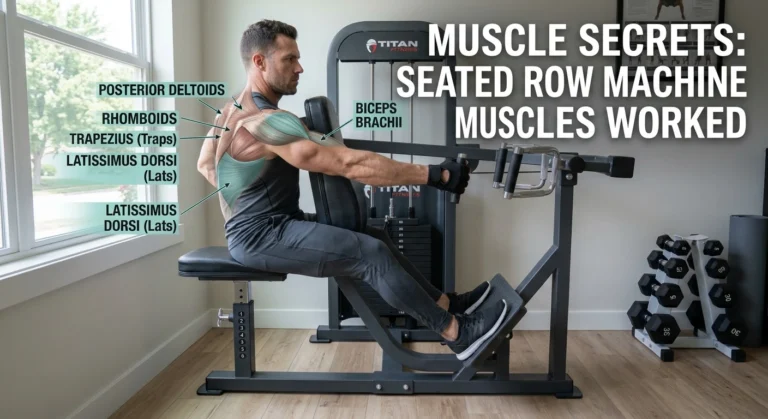
Seated rows work the muscles that pull your upper arms back and bring your shoulder blades together: the lats, rhomboids, and middle traps. With regular training and gradual progress, you can build back strength and muscle.
Trains Several Upper-Body Muscles
Your back does most of the work, but your biceps, forearms, and rear delts also help. This makes the seated row a great fit for an upper-body day or a back day.
Makes Resistance Easy to Adjust
On many weight-stack machines, you change the weight with a selector pin. It is easy to start light while you learn, and then add weight as you get stronger. Plate-loaded machines and other types adjust in different ways.
Helps You Practice a Controlled Pull
The machine gives you a set path, so new users can focus on their posture and movement instead of balancing a dumbbell or barbell. But every machine moves a little differently, so you still need to control your body and the resistance.
Supports a Balanced Routine
Rows train your pulling muscles, which balances pushing exercises like the chest press and push-ups. A good program uses a mix of exercises instead of relying on one machine.
Which Muscles Does a Seated Row Weight Machine Work?
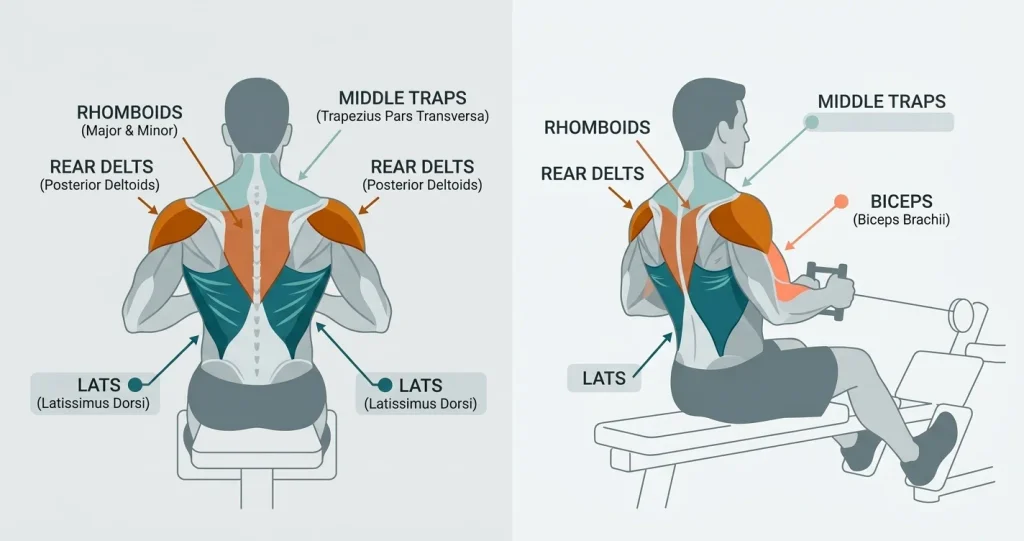
The seated row mainly builds the back muscles. Some arm and shoulder muscles help too. Which muscles work more depends on your grip, your elbow path, the machine design, and how far you move.
| Muscle | Main job during the row |
| Latissimus dorsi (lats) | Pull your upper arms back toward your body |
| Rhomboids | Draw your shoulder blades toward each other |
| Middle trapezius | Help pull your shoulder blades back |
| Rear deltoids | Help move your upper arms backward |
| Biceps | Help bend your elbows as you pull |
| Forearm muscles | Help you hold the handles |
Each back muscle works a little differently. Your elbow angle and the handle type decide which muscles do more. Wider elbows usually put more work on the rear shoulders and upper back. Elbows closer to your sides usually put more focus on the lats.
You do not need to exaggerate the squeeze at the end of each rep. Focus on a comfortable range, a controlled movement, and a steady upper body.
7 Powerful Tips for Using a Seated Row Weight Machine
These tips will help you get more from every workout without making the exercise complicated.
Tip 1: Set Up the Machine for Your Body
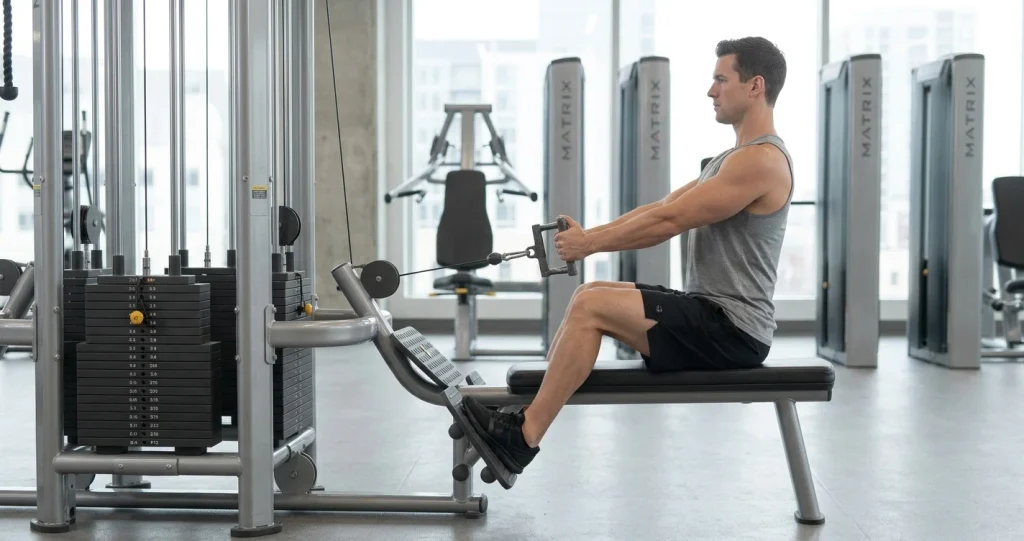
Set up before you pull the first handle. A poorly placed seat or foot support can make you overreach, round your back, or bend your wrists in an awkward way.
Before you start:
• Adjust the seat so you can reach the handles comfortably.
• Put your feet firmly on the supports, if there are any.
• Set the chest pad as the maker’s instructions say.
• Check that your knees are comfortably bent and your feet are steady.
• Hold the handles and make sure you do not have to overstretch your shoulders to reach them.
Your starting position should feel secure, not cramped or overstretched. If you cannot reach the handles with a straight back and your shoulders away from your ears, adjust the machine before you pick your weight. Not every machine adjusts the same way, so follow the maker’s instructions.
Tip 2: Choose the Right Weight Instead of Chasing Heavy Numbers
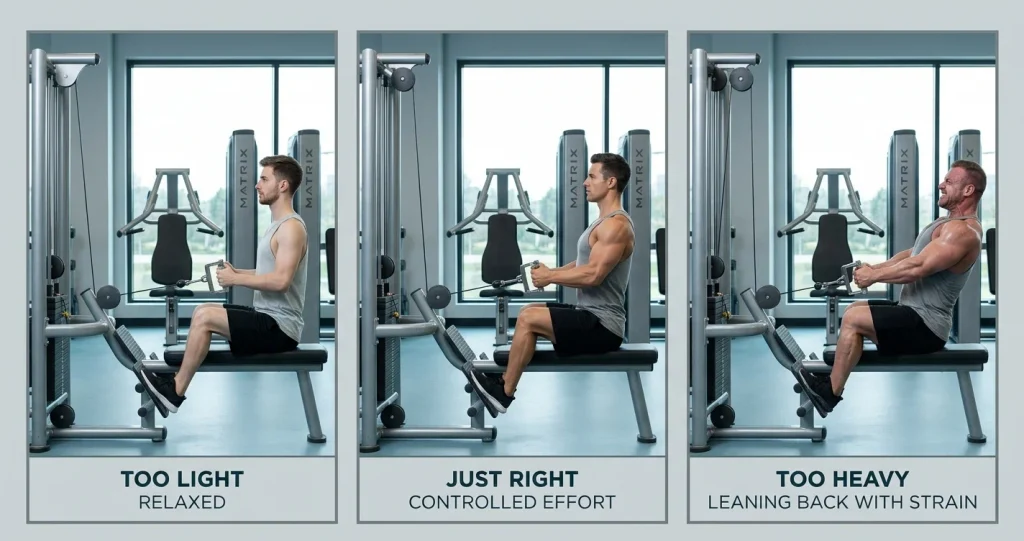
Many people want to lift heavy to impress themselves or others. But heavier weight only gives a better workout if you can control it. Find a weight that lets you do every rep smoothly, breathe easily, and keep the same form on every rep.
A simple way to check your weight:
• Too light: you finish the set easily and could do many more good reps.
• Just right: the last few reps feel hard, but you keep good posture and control.
• Too heavy: you yank the handles, swing your body, lift your shoulders, or cut your range short.
As a beginner, start light and master your form before adding resistance. The number on a weight stack cannot be compared across machines, because machine design and pulleys are different.
The smart rule: earn the heavier weight by showing steady control with lighter weight first.
Tip 3: Master Your Starting Position
Your posture is the base of every rep. Before you pull, get into a position where your back can work without extra motion in your lower back or hips. Use this checklist:
• Sit tall with your spine in a comfortable, neutral position.
• Keep your chest naturally lifted, without arching your lower back.
• Relax your shoulders. Do not shrug them up.
• Keep your feet planted on the supports.
• Reach forward comfortably without forcing your shoulders.
Your shoulders should be able to move forward a little so you can start the rep with your upper body staying in place. If your shoulders feel tight, or the machine does not allow a deep stretch without discomfort, do not force a bigger stretch. If your machine has a chest pad, let it support you without pressing hard into it. On a model with no pad, keep your upper body steady yourself.
Tip 4: Pull With Your Elbows, Not Just Your Hands
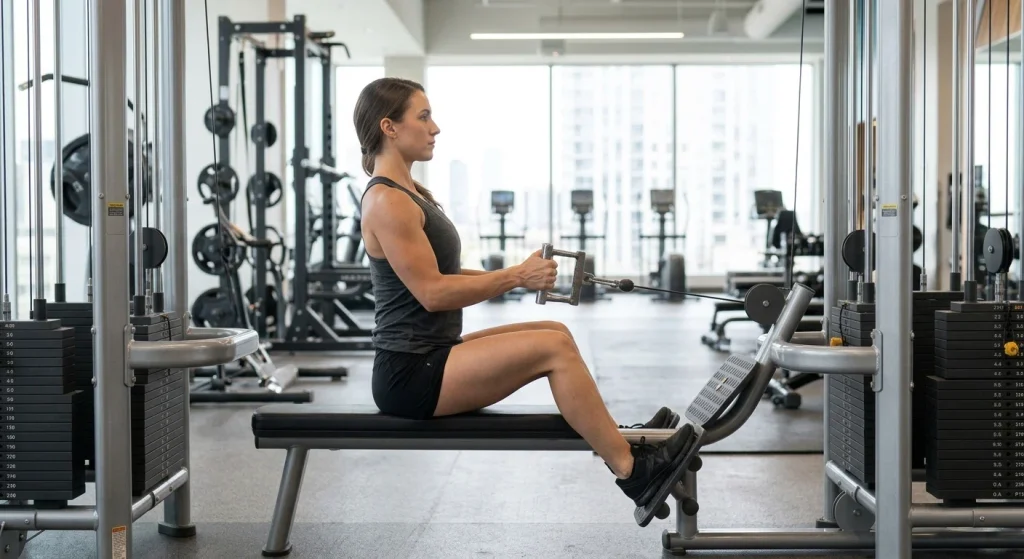
Beginners often struggle with this. They focus so much on their hands and arms that they forget the rest of the body, and they use more force than needed. The pull becomes less steady and less precise.
Think about moving your elbows back, while your wrists stay comfortable and your hands stay on the grips.
1. Start with your arms comfortably straight.
2. Begin a smooth pull without jerking the weight.
3. Guide your elbows backward along a natural path.
4. Bring the handles toward your body as far as your comfortable range allows.
5. Pause briefly if you can do so without shrugging or changing your posture.
Do not force your elbows far back just to get a stronger squeeze. Your goal is a well-controlled movement, not the biggest range at any cost. A simple cue: “elbows back, shoulders relaxed.” This helps you use the right muscles for the row and keeps your reps smooth.
Tip 5: Control Every Rep From Start to Finish
The pull is only half the exercise. The return matters just as much. After you pull the handles toward you, straighten your arms slowly and let the weight go back to the start. Do not drop the weight stack suddenly, and do not let the handles yank you forward.
A good rhythm for beginners:
• Pull the handles smoothly.
• Pause briefly, if comfortable.
• Return the weight under control.
• Reset your posture before the next rep.
You do not need to go very slowly. Just avoid going so fast that momentum does the lifting. If you cannot control the return, lower the weight and try again.
Tip 6: Match Your Grip to Your Goals and Comfort
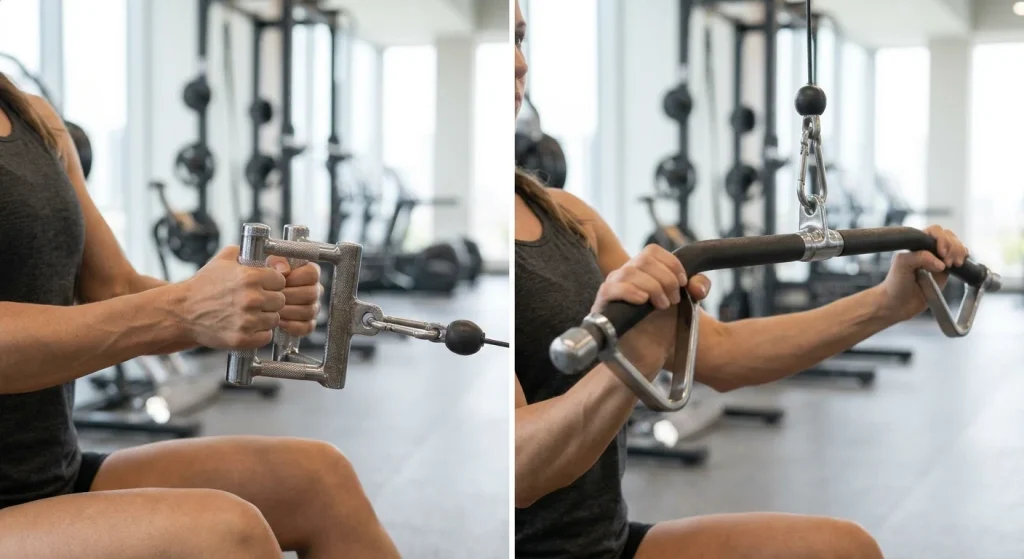
The handle you use (close, neutral, wide, and so on) depends on your machine, what feels comfortable, and which muscles you want to focus on.
• Close or neutral grip: often lets your elbows stay near your sides. This is a good first choice for many beginners if the handle feels comfortable.
• Wide grip: lets your elbows move farther from your body. This may add more work for the rear shoulders and upper back.
No single grip isolates one muscle. Your elbow path, your range of motion, and the machine design all decide how much each muscle works. A good grip keeps your wrists relaxed, your shoulders loose, and your movement controlled. If a grip hurts or pinches, try a different one.
Tip 7: Progress Without Sacrificing Form
Once you can do every rep of a set in the same way, start making the exercise harder. Slowly raising the challenge for your muscles is called progressive overload, and it helps build muscle and strength. A simple plan:
• Choose a manageable weight.
• Work in a suitable rep range, such as 8 to 15 reps.
• Keep your upper body steady and control the return.
• Add reps while your technique stays good.
• When you can finish every set with the target reps, add a small amount of weight.
For example, if you can do 10 controlled reps today, work up to 12 or 15 with the same weight before moving to a heavier one, as long as it fits your program.
Do not change everything at once (weight, sets, and reps). Change one thing at a time so you can see how your body responds. Steady, small increases beat big jumps. A small weight increase is more useful than a big one that makes you swing or lose reps.
Common Seated Row Weight Machine Mistakes to Avoid
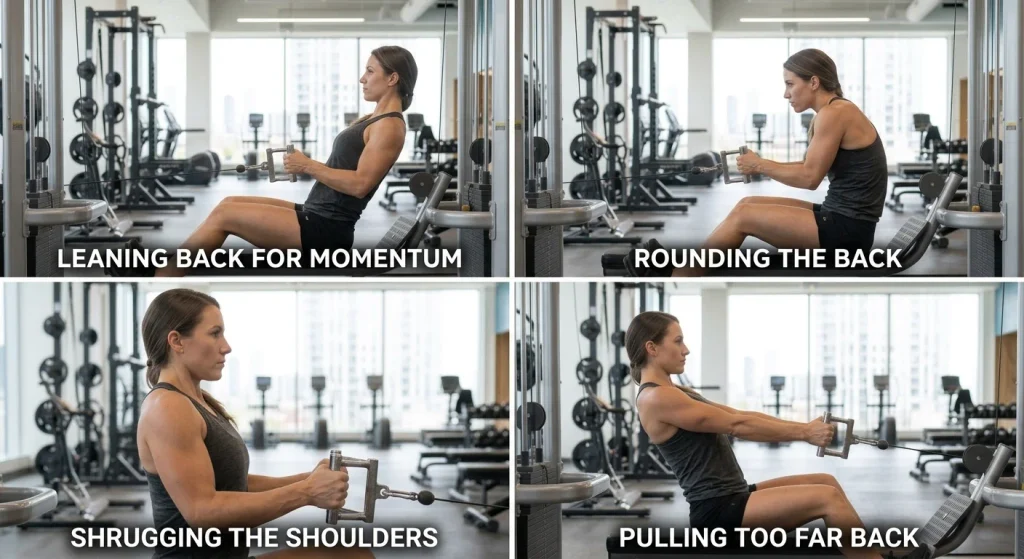
Even a great workout loses value if you rush or pick too much weight. Watch for these common mistakes.
Using momentum to pull the weight. Swinging your body back may make a heavier weight feel easier, but it makes the movement harder to control. Fix: lower the weight and keep your body still. Your arms and upper back should do the pulling, so you should not need to lean back much.
Rounding your back. If you reach too far forward or let the weight pull you out of position, your back may curve too much. Fix: adjust the seat or your starting position so you can grab the handles easily, and keep a neutral spine through every rep.
Shrugging your shoulders. Your shoulders should stay down, away from your ears. Shrugging adds extra tension and ruins the flow of the pull. Fix: relax your shoulders and do not shrug on purpose while pulling. Let your shoulder blades move naturally.
Pulling too far behind your body. Pushing the handles farther back than is comfortable makes your shoulders roll forward or your body shift. Fix: stop when you reach a comfortable position with good posture. A bigger movement is not always a better one.
Letting the weight snap back. A quick return gives you less control on the lowering part of the rep. Fix: straighten your arms slowly and control the speed of the weight. Keep the movement smooth so the machine does not pull you forward.
Choosing a grip that hurts. A handle that feels awkward can cause wrist and shoulder discomfort. Fix: try another grip or change your body angle. If you feel sharp pain, stop right away and talk to a medical professional if the discomfort continues.
How Much Weight Should Beginners Use?
There is no single starting weight for everyone. The right weight depends on your strength, your lifting experience, the machine, and the reps you plan to do. A common start for beginners is a fairly light weight for 2 to 3 sets of 8 to 15 controlled reps. This is a rule of thumb, not something you must follow in every workout.
How to find your starting weight:
• Start with a light setting and practice a few reps.
• Check that you can keep your upper body steady.
• Make sure you can pull and return the handles without jerking.
• Add a little weight only if the movement stays controlled.
• Stop the set when you can no longer keep good technique.
At the end of a set, you should feel your muscles working. But you should not hold your breath, use body momentum, or push through pain to finish.
Remember that the number on one machine does not mean the same resistance on another. Judge your weight by your technique and effort, not by what other people in the gym are lifting.
Seated Row Weight Machine vs. Cable Row
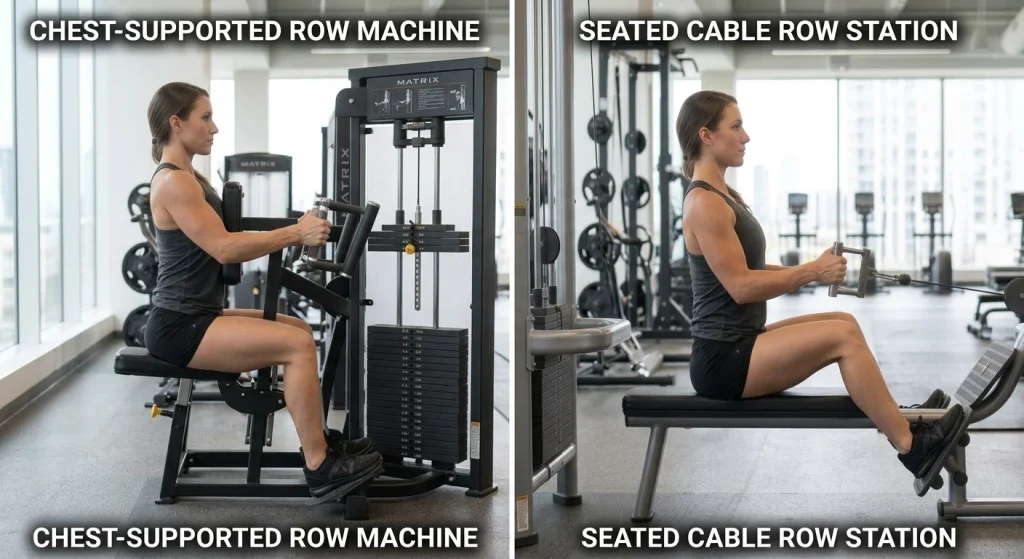
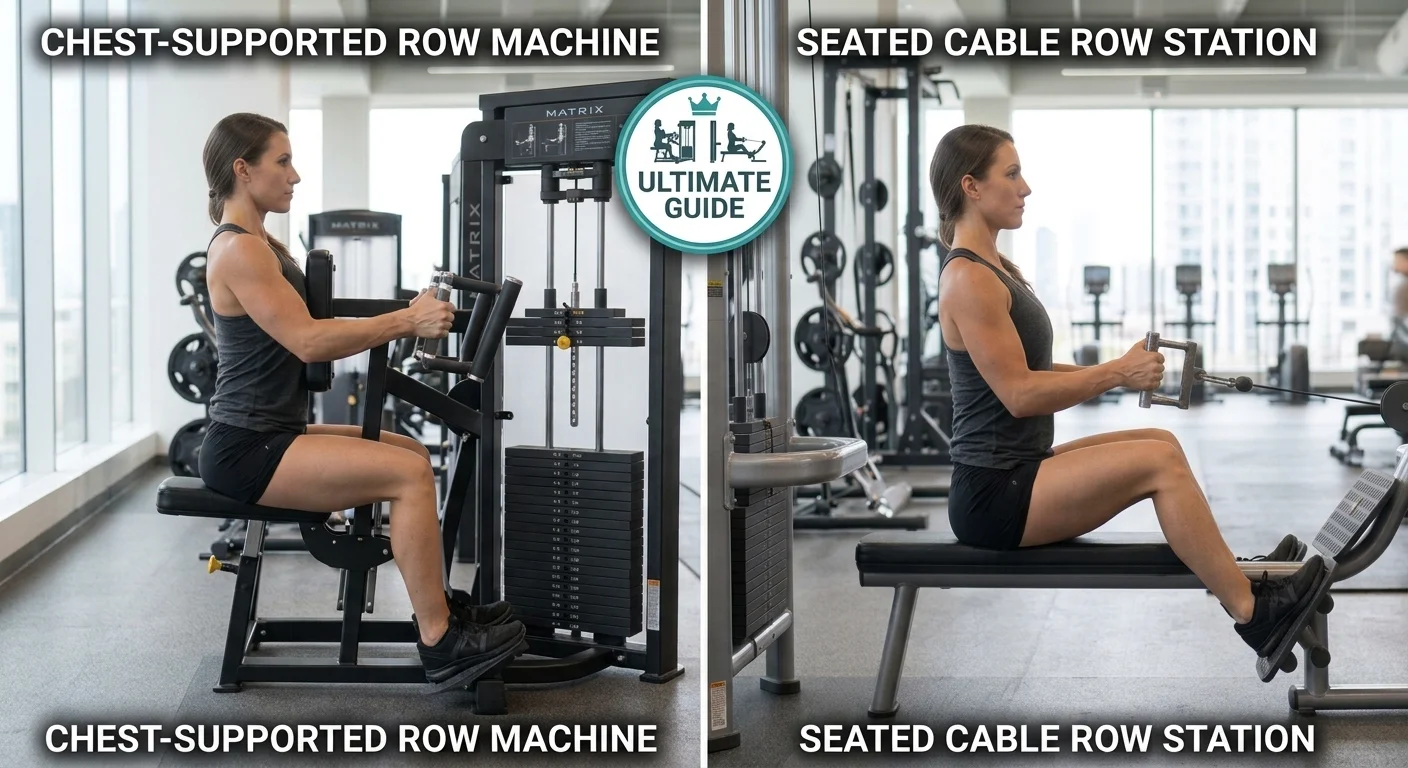
The two terms are sometimes used to mean the same thing. A “seated row machine” may have its own built-in cable, but when people say “cable row” they usually mean a seated cable station with a pulley where you can swap the handle.
| Feature | Seated row machine | Seated cable row station |
| Movement path | Often more guided by the machine | Usually allows more freedom |
| Body support | May include a chest pad or fixed support | Often needs you to steady your upper body |
| Handle options | Depends on the model | Often has interchangeable handles |
| Beginner experience | Can be simple when adjusted well | Flexible, but needs attention to posture |
| Best choice | A machine that fits your body and goals | A setup that allows comfortable, controlled movement |
Neither is automatically better. A chest-supported machine helps you limit upper-body movement, while a cable machine offers more choice in handles and body position. The best choice is the one that feels comfortable, gives you enough range of motion, and helps you keep your technique steady. You can use both in a larger strength plan when it makes sense.
Final Thoughts
Adding the seated row weight machine to your regular strength routine is a good way to build your back. Choose a weight that lets you do every rep correctly, not the hardest weight in the gym, so you can move with control and comfort.
Start with the machine adjusted to your body. Choose a reasonable weight. Then pull the handles back slowly, with your elbows moving back, and return them slowly to the start. When you can repeat the movement the same way every time, make it harder gradually instead of adding a lot of weight quickly.
Keep three basics in mind: correct positioning, controlled movement, and progressive overload. Follow them and you will get the most from your seated row routine over the long term.
What is a seated row weight machine used for?
It trains your back with a horizontal pulling movement. It mainly works the lats, rhomboids, and traps, and it also works the biceps, rear delts, and forearms.
Which muscles does a seated row weight machine work?
The main muscles are the lats, rhomboids, and middle traps. The biceps and rear delts help. How much each muscle works depends on your grip, your elbow path, and the machine design.
How much weight should a beginner use?
Start with a weight that lets you move slowly and with control, without swinging your body or rounding your back. A light weight is a great way to practice. Once the movement feels comfortable, add weight slowly.
How many sets and reps should I do?
A good beginner start is 2 to 3 sets of 8 to 15 reps. Adjust this for your fitness level, your goals, and the rest of your workouts.
Can a seated row weight machine help build a bigger back?
Yes, when you use it regularly, add resistance gradually, eat well, and recover enough. A machine alone cannot guarantee muscle growth.
Should I lean backward during seated rows?
Avoid leaning far back or rocking. Keep your upper body steady and your spine neutral. Your shoulders and elbows should create the pull, not the momentum of your whole body.
What is the correct breathing technique?
Breathe out as you pull the handles toward your body, and breathe in as you return them. Keep breathing normally and do not hold your breath for the whole set.
Is a seated row machine better than a cable row?
Neither is better for everyone. Machine rows give a more guided path, and cable stations give more handle and position options. Choose the one that suits your body, comfort, and goals.
How often should I use a seated row weight machine?
Beginners can include rows in their back workouts once a week, and up to twice a week, depending on their training and recovery. Your total weekly volume matters more than a fixed schedule.
What are the most common mistakes to avoid?
Using too much weight, moving your upper body, rounding your back, lifting your shoulders, and letting the weight stack slam or snap back. Lighter weight and a focus on form on every rep help fix these.

One Comment