Stop Wasting Reps: Seated Row Machine Form in 7 Steps
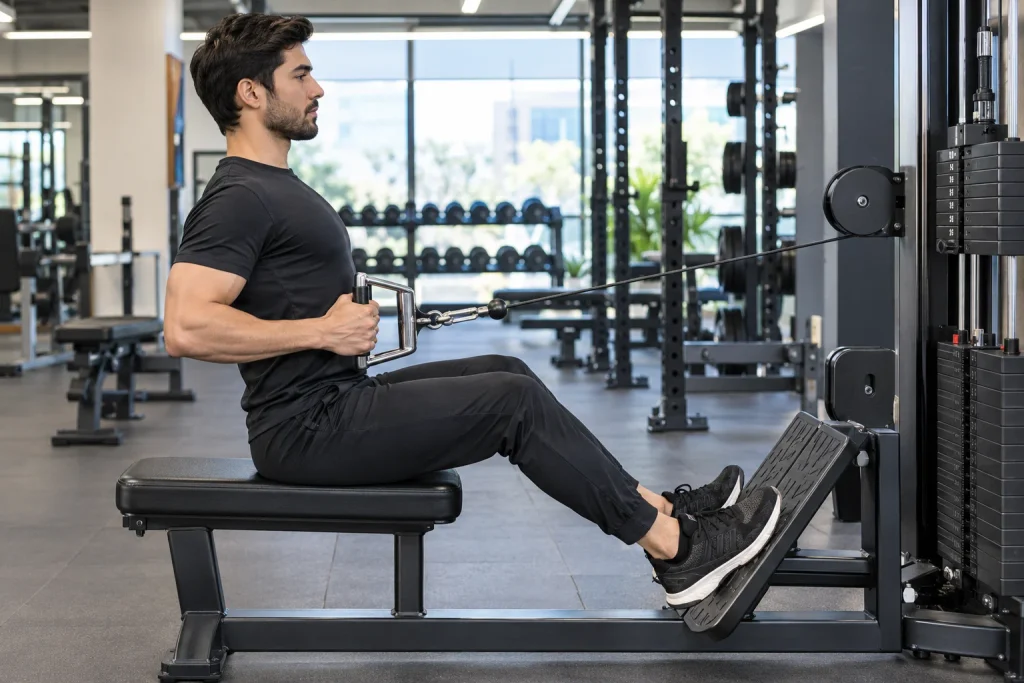
The seated row machine looks simple: you sit down, grab the handle, and pull. But if you use too much weight, lean far back, or rush each rep, you make good form much harder than it needs to be.
Good seated row form helps you train your back, repeat the exercise with consistency, and build strong habits as a beginner. You do not need fancy tricks or the heaviest weight. You need a comfortable setup, a controlled movement, and a weight that lets you keep the same body position on every rep.
In this guide you will learn how to set up the machine, do each rep step by step, spot common mistakes, and fit seated rows into your routine.
Quick Answer: What Is the Correct Seated Row Machine Form?
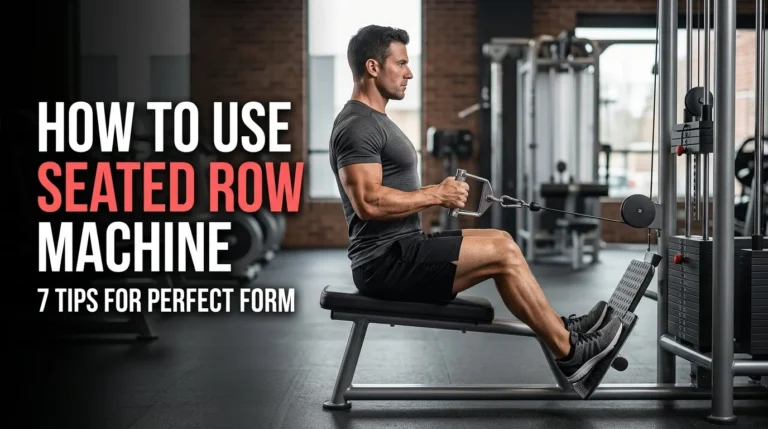
Put your feet on the platform with your knees slightly bent, and sit tall with a natural, relaxed spine. Reach for the handles without letting your shoulders roll forward. Pull toward your lower ribs or upper stomach by driving your elbows back. Keep your shoulders down and return the weight slowly.
Do not lean far back, round your back, shrug your shoulders, or let the weight pull your arms forward out of control.
Key Takeaways
• Adjust the seat and foot platform so you can reach the handles comfortably.
• Keep your spine natural and your upper body mostly still.
• Pull by guiding your elbows back, not just by using your hands.
• Keep your neck relaxed and do not shrug.
• Use a comfortable range. Do not force a huge stretch or a very long pull.
• Control both the pull and the return.
• Start with a weight that feels comfortable, and add more only as your form improves.
How to Set Up a Seated Row Machine
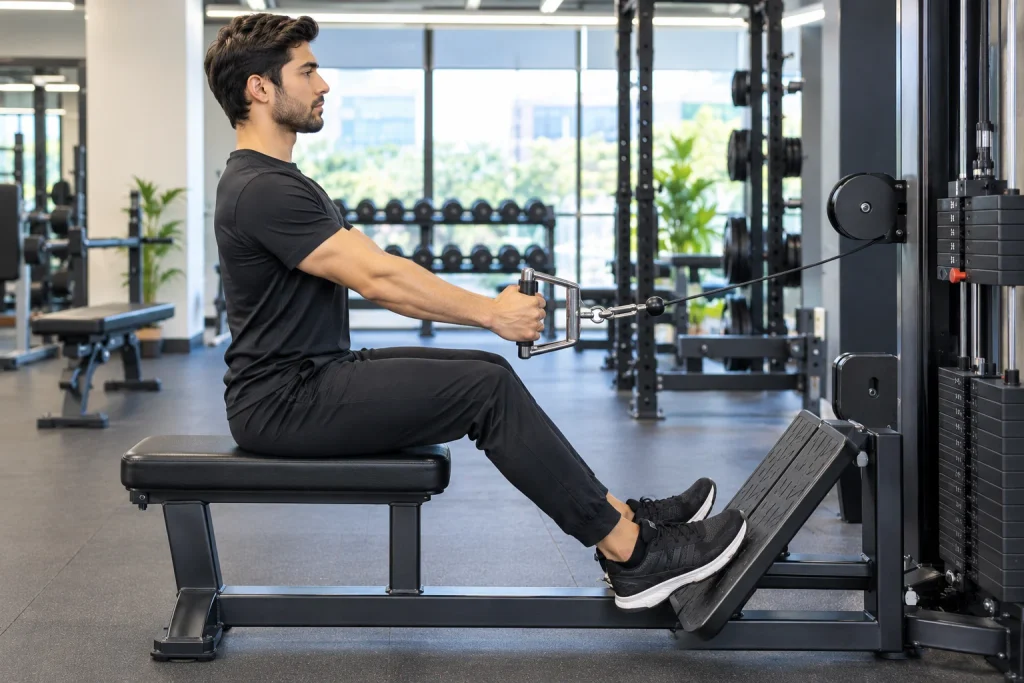
Adjust the machine to fit your body before you start your set. If you skip this, you may struggle to reach the handles, hold a good back position, or move smoothly. Machines differ, so use these tips as a starting point and then follow your machine’s own instructions.
Adjust the Seat and Foot Platform
Sit with both feet firmly on the platform or floor. Keep your knees slightly bent, not locked. Set the seat height so you can reach the handles without straining. Your upper body should be tall, not curled forward. If your machine has a chest pad, adjust it so it supports you and still lets you breathe normally.
Before you start, check that:
• Your feet feel secure.
• Your knees are slightly bent.
• You can reach the handles easily.
• Your shoulders and neck are relaxed.
• You can hold a comfortable, good posture.
If you have to slide forward on the seat or overstretch your shoulders to reach the handles, change the seat position or your starting position.
Choose a Manageable Weight
Beginners should start light. Do a couple of practice reps to see how your body moves. The pull should be smooth, with no body jerk, no shrugging, and no rushing on the way back. If you have to lean back to finish a rep, the weight is too heavy for your current form.
Two machines with the same number can feel very different. Pay attention to how well you can control the movement, not to how your weight compares with someone else’s.
Find a Comfortable Starting Position
Hold the handles firmly, but not too tight, because a tight grip tires your forearms for no reason. Keep your wrists in line with your forearms and your shoulders relaxed.
As you reach forward, your shoulder blades will move forward a little. That is normal. But do not stretch farther than is comfortable, and do not collapse your upper body forward to gain extra reach. Before the first rep, take a breath in, gently tighten your stomach muscles, and make sure you feel stable.
Beginner tip: If your machine has a chest pad, use it as the maker recommends. If it does not, be extra careful to keep your body still on every rep.
Seated Row Machine Form in 7 Steps
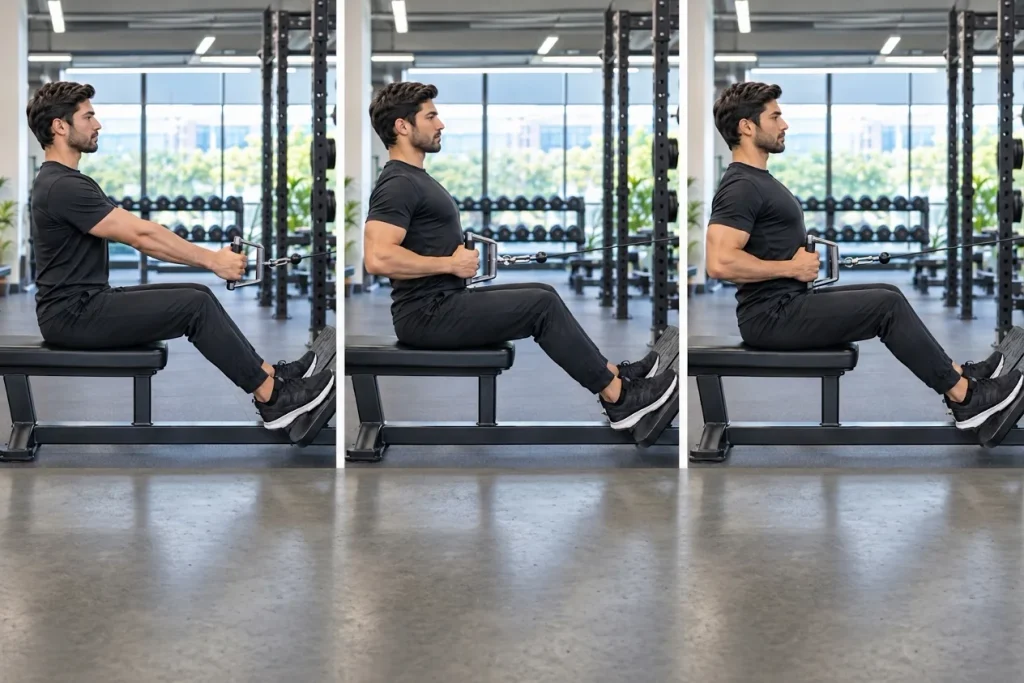
Good form is easier to learn when you break it into small parts. Instead of only thinking “pull the handle to my chest,” think about your position, your elbow path, and how you control the return.
Step 1: Sit Tall and Brace Your Core
Start with your upper body upright, your head in line with your spine, and your shoulders relaxed. You should be able to sit comfortably without extra strain on your lower back. Gently tighten your stomach muscles, as if you were ready for a light tap on the stomach. This keeps you steady while your arms and shoulders pull. Do not tense every muscle. You should still be able to breathe normally.
Form check: if you rock before you even pull, reset your starting position.
Step 2: Start With Your Arms Comfortably Straight
Reach forward until your arms are almost straight and your shoulders feel comfortable. Do not lock your elbows. Let the handle move away from you under control. Your shoulder blades moving forward is normal, but do not round your whole back or let the weight drag your shoulders into an uncomfortable position. The goal is a comfortable reach, not the longest reach possible.
Step 3: Keep Your Shoulders Relaxed
Do not let your shoulders rise toward your ears as you pull. This is a common mistake when the weight is heavy or when you are trying too hard to finish a rep. Keep your neck relaxed and let your shoulder blades move freely as your arms go back. Aim to move them back and down with control. A natural, smooth movement is better than forcing your shoulders into an odd position.
Step 4: Pull With Your Elbows
Now begin to pull the handle toward you. Bend your elbows and move them back, with your hands following. Think about your elbows going back, instead of the handle going to your chest.
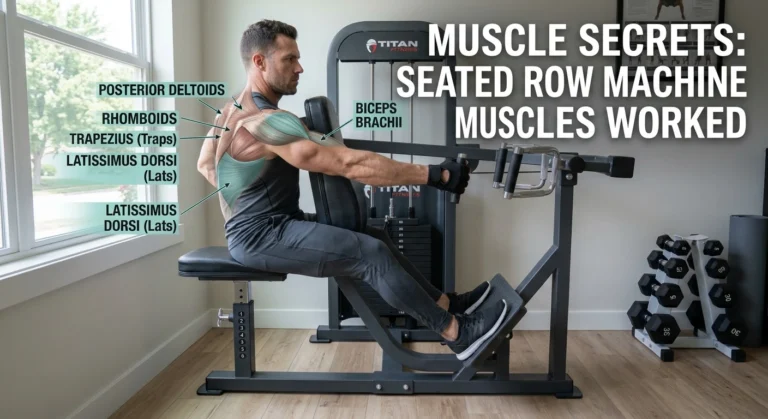
Your biceps and forearms will work, and that is normal. The aim is to use your arms and back together, not to switch the arms off. Keep your wrists straight, and do not bend them to pull the handle farther. A good thought is: “elbows back, hands follow.”
Step 5: Bring the Handle Toward Your Torso
Pull the handle toward your upper stomach or lower ribs, depending on your machine and handle. Stop when your elbows reach a comfortable point. Do not force your shoulders or lower back into an uncomfortable position.
If reaching your stomach makes you shrug, bend your wrists, or lean back, stop earlier, at the point where you still have control. You can pause briefly at the end if it feels comfortable. You should feel your back and arms working, but you do not need a strong squeeze on every rep. The goal is a steady body and a smooth movement.
Step 6: Avoid Leaning and Twisting
Keep your upper body mostly still while you pull. If you lean far back to move more weight, the row turns into a momentum move. Also avoid twisting to get one elbow farther back. Keep both sides even and balanced.
A little natural movement can happen, depending on the machine and the person. But while you are learning, keep your upper body still. If you cannot finish a pull without swaying or twisting, lower the weight and try again.
Step 7: Return the Weight Slowly
After the pull, straighten your arms and let the handle move forward under control. Stay firm through your body. Your shoulders may drift forward a little, but do not let the weight pull your arms or shoulders into an awkward position. Do not let the weight stack slam down after each rep. That breaks your rhythm and your control. When your arms are back at the start, move into the next rep smoothly, with no jerk.
Remember: reach comfortably, pull your elbows back, and return slowly. Use the same controlled movement even when you get tired.
Correct vs. Incorrect Seated Row Form
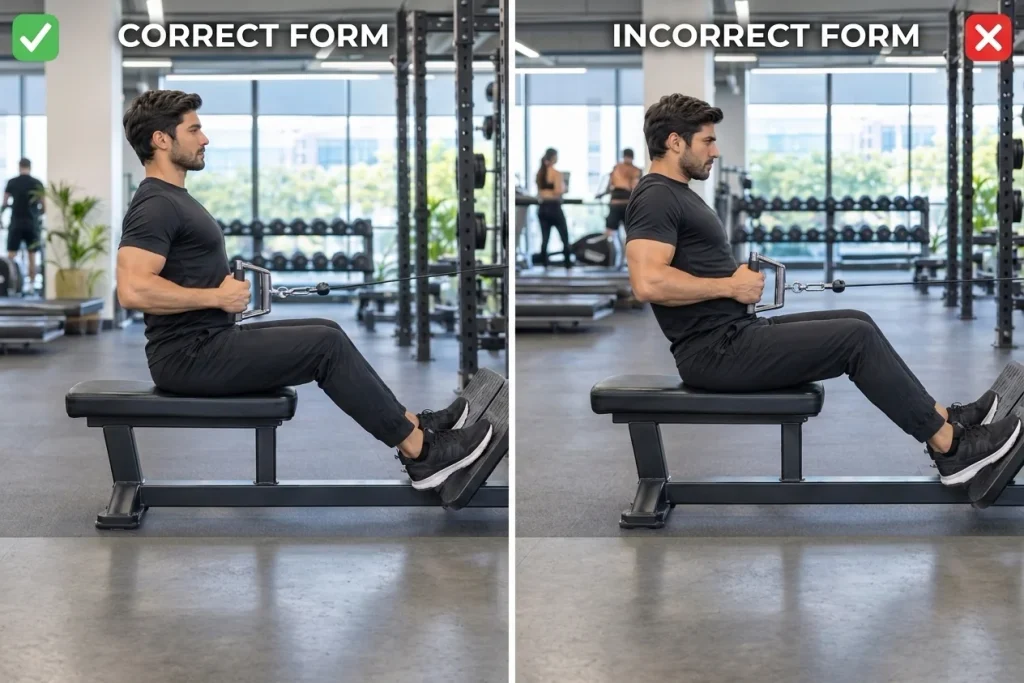
The difference between a controlled rep and a sloppy one is usually your body position and the quality of the movement. Every rep does not have to look perfect, but you should be able to repeat the exercise with very little momentum.
| Correct form | Incorrect form |
| Upper body stays mostly steady | Body rocks backward and forward |
| Spine stays comfortable and natural | Back rounds too much on the reach |
| Shoulders stay relaxed | Shoulders rise toward the ears |
| Elbows move back smoothly | Handle is jerked with the arms and body |
| Wrists stay in line with forearms | Wrists bend to force the movement |
| Weight returns under control | Weight stack crashes down |
Your hand and elbow position will change with the machine and the handle. For example, a narrow neutral handle makes your arms move differently than a wide bar. Focus on quality and how the movement feels, not on copying someone else.
7Common Form Mistakes and How to Fix Them
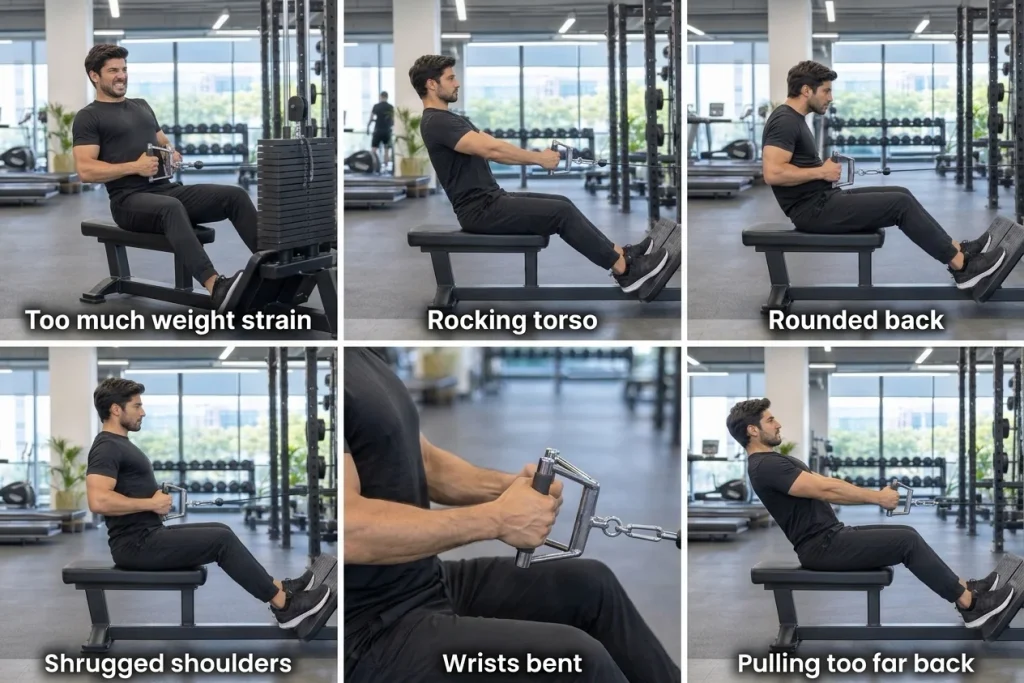
If seated rows feel uncomfortable, you probably do not need a new exercise. Try a small change in your setup, your weight, or your technique.
Mistake 1: Using too much weight. You yank the handle, fall backward, or lose control on the last reps. Fix: lower the weight until you can finish every rep smoothly. Add weight slowly only when your form stays the same through the whole set. A hard rep should still be a controlled rep.
Mistake 2: Swinging your torso. Your upper body rocks to help move the handle. Too much momentum makes the pace uneven and can put extra stress on your lower back. Fix: sit tall, tighten your core, and lower the weight. Do a few warm-up reps with very little upper-body movement.
Mistake 3: Rounding your back. You fold forward to reach the handle or tuck your hips and lower back. Fix: adjust your seat or foot position if needed, and do not overreach. Your shoulders moving forward a little is normal, but folding your whole back to gain length is not.
Mistake 4: Shrugging your shoulders. Your shoulders rise toward your ears as you pull, often because the weight is too heavy. Fix: lower the weight, relax your neck, and guide your elbows back. If you still shrug, shorten the pull so you can keep control.
Mistake 5: Pulling only with your hands. The exercise feels like curling the handle. Fix: keep a firm grip, keep your wrists straight, and think about moving your elbows back. Your arms will help, but the pull should feel like one smooth effort, not a hurried yank.
Mistake 6: Pulling too far back. Your elbows go far past your sides, your chest pushes forward, or your lower back arches to finish the rep. Fix: stop when your elbows reach a comfortable point and your body is steady. A longer range is not better if you lose control to get it.
Mistake 7: Letting the weight snap forward. The weight stack drops and the handle flies away from you. Fix: straighten your arms slowly and control the return. When your form starts to fall apart near the end of a set, stop instead of squeezing out extra reps.
A Quick Form Reset Before Your Next Set
Ask yourself:
• Can I sit comfortably with my feet supported?
• Is the weight light enough to control?
• Can I keep my upper body steady?
• Can I pull without shrugging or twisting?
• Can I return the handle slowly?
If the answer to any of these is no, make a small change before you continue.
How to Breathe During Seated Rows
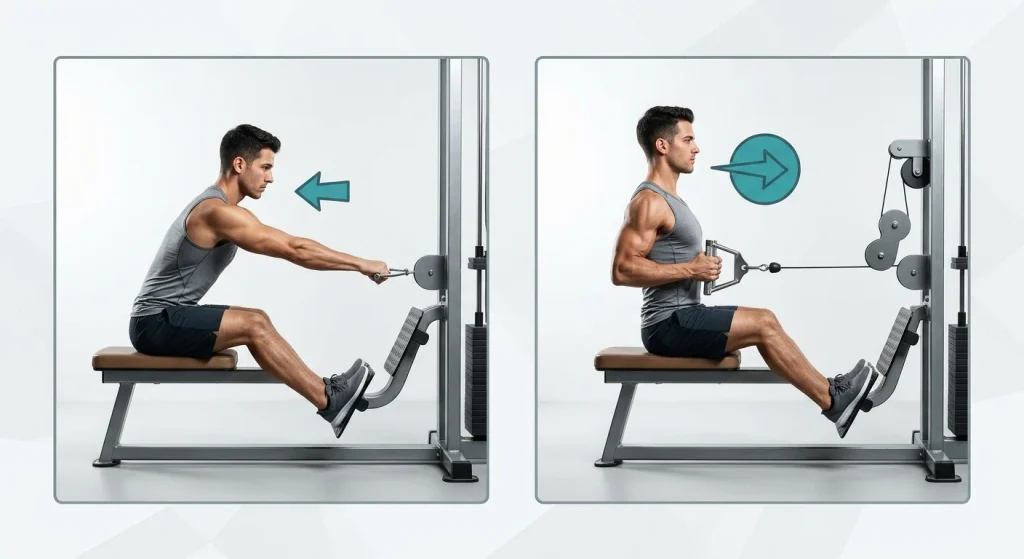
Breathing may not seem like a big part of your performance, but it helps you keep a steady pace and stops you from rushing. For a typical set:
• Breathe in as the handle moves forward.
• Breathe out as you pull the handle toward your body.
• Keep breathing naturally during the whole set.
A short tightening of your stomach muscles before you pull can help keep your spine steady. But try not to hold your breath on every rep. As the weight gets harder, your breathing will speed up, and that is normal. You should not need a big breath before each rep, especially while you are learning.
How Much Weight Should Beginners Use?
There is no single starting weight for everyone. Every machine has its own pulley system, leverage, and resistance, so the same number on two machines can feel very different. Start with light practice reps. Then slowly raise the weight until the set feels challenging but still controlled.
| Starting guide | What to do |
| Sets | 2 to 3 |
| Reps | 8 to 12 per set |
| Rest | About 60 to 120 seconds, or as long as you need |
| Movement | Smooth pull and slow return |
| Progress | Add weight in small steps, only if your form stays the same |
These are general guidelines, not strict rules. Your own experience, program, and recovery may call for a different plan.
How Do You Know If the Weight Is Right?
The weight is probably right if:
• Your upper body stays still for all your reps.
• Your wrists and shoulders stay comfortable.
• The last few reps are hard but still controlled.
• You can return the weight without being pulled forward.
If every rep feels easy and your form stays clean without strain, you may be ready to add a little weight. But if you jerk your body or shrug, lower the weight. Do not focus on the number on the stack. Good form builds strength better than chasing a heavier weight each time.
Seated Cable Row vs. Chest-Supported Row
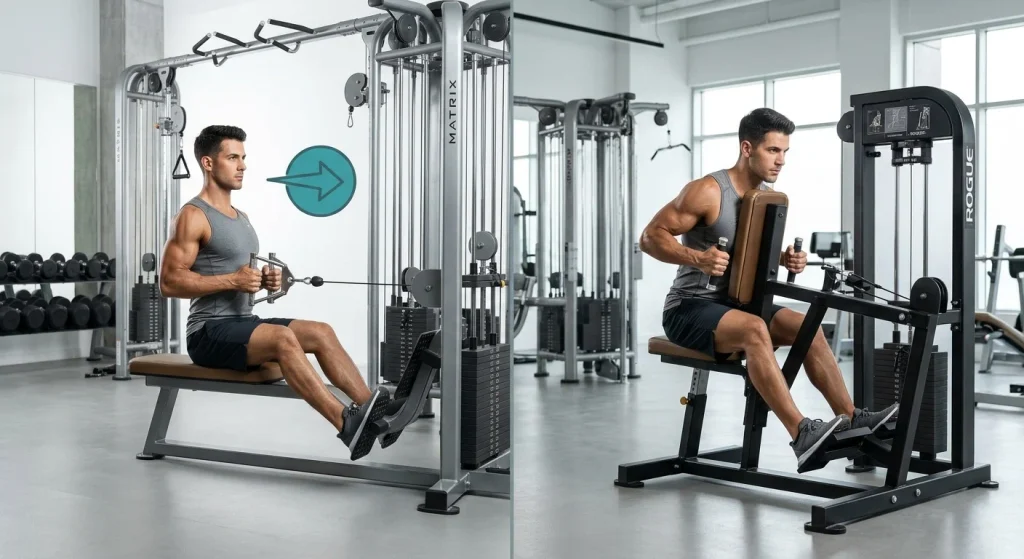
The way your body is supported changes how you do each of these exercises for the upper-back pulling muscles.
Seated Cable Row
On a standard seated cable row, your feet are braced on a platform and you pull a cable handle. There is no chest pad, so you have to keep your upper body steady and control the cable as it moves away from you. It works well for beginners who can hold their position and control the resistance.
Chest-Supported Row
On a chest-supported row, a pad holds up your chest while you pull the handles toward you. The pad helps reduce extra body movement, but you still have to control your shoulders, elbows, wrists, and range of motion. Adjust your position to fit the machine, and do not force yourself into a position that feels awkward or painful.
Which One Is Better for Beginners?
Neither is better for everyone. The chest-supported row can be easier for people who find it hard to keep their upper body steady. The seated cable row is a good choice if you can stay in position while you control the cable. Choose the one that feels comfortable, lets you do each rep with little or no discomfort, and does not force you to change your natural movement too much.
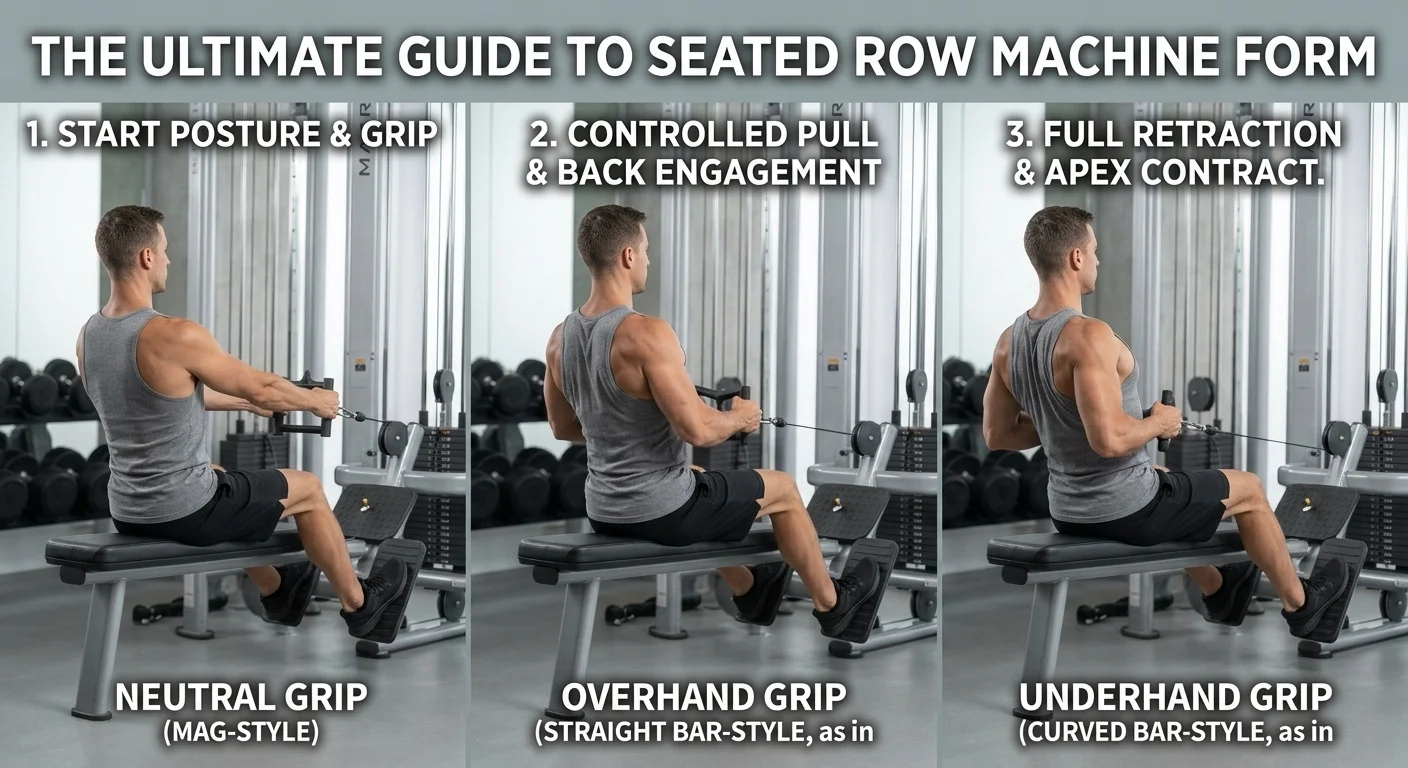
Does Your Grip Change Your Form?
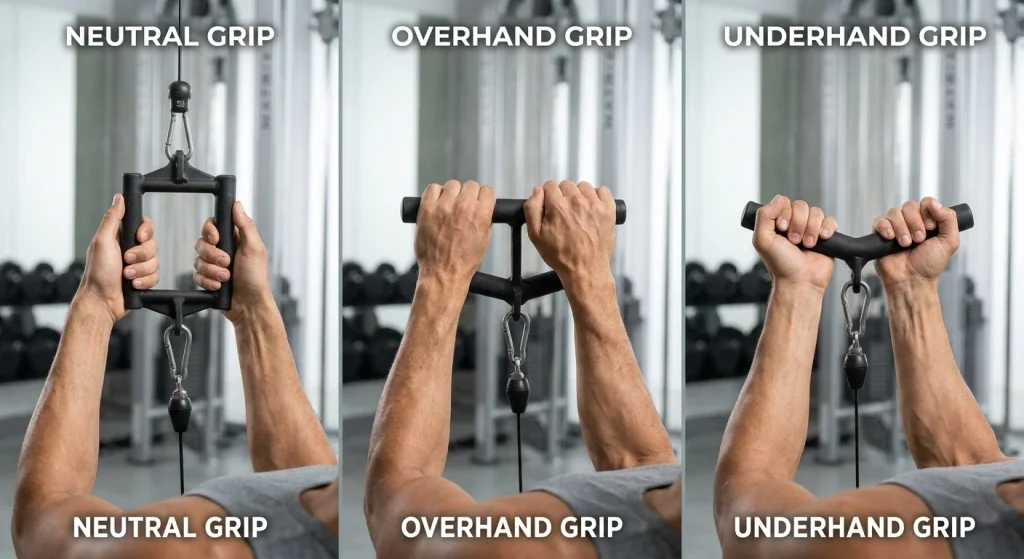
Yes. Changing the handle changes how your elbows move and how the exercise feels.
• Neutral grip: palms face each other. Most beginners find this the easiest position.
• Overhand grip: palms face down. The handle width changes your arm path.
• Underhand grip: palms face up. Many people notice their biceps working more.
You do not need to change your grip every session. Choose a grip that feels good, keeps your wrists straight, and lets you do steady reps.
How to Check Your Seated Row Machine Form
When you are focused on your workout, it is hard to notice every mistake. A quick check helps you see which part of your technique needs work.
Check Your Position During the Exercise
During a light set, ask yourself:
• Do I feel any back pain that does not go away?
• Am I leaning back too far at the end of the pull?
• Are my shoulders lifting toward my ears?
• Do my elbows move back smoothly?
• Can I control the handle on the way forward?
Work on only one or two changes at a time, and let them become natural before you add more.
Pay Attention to How the Movement Feels
You should normally feel tension in your back and arms during a row. Your biceps and forearms help, so it is normal to feel effort there too. But you do not need a strong feeling around your shoulder blades on every rep. A steady position and consistent form matter more.
If your lower back works much harder than you expected, check whether you are leaning, arching your back, or lifting more than you can control.
If you feel severe pain, strange tingling, or discomfort that changes how you move, stop. Lower the weight and check your setup. If the problem continues, talk to a licensed medical professional instead of trying to work around it.
Ask for Feedback When Needed
If you are not sure why your upper body moves too much or why your shoulders sit too high, ask an experienced, certified trainer to check your setup. A small change to the seat, handle, or starting range can often make the exercise easier and more comfortable.
Final Thoughts
Good seated row form is not about the heaviest weight or dramatic reps. It is about a setup that feels right, a movement you can control, and the same clean rep every time.
Start by fitting the machine to your body. Keep your upper body still as you bring your elbows back, then return the handle slowly. If you swing, shrug, or lose control, lower the weight and try again.
As your form becomes steady, you can slowly make seated rows harder, so they become a productive part of your back-training plan.
Remember: clean reps come before heavier weights. Master the movement first, then build your strength.
What is the correct seated row machine form?
Sit with your feet flat, knees slightly bent, and a straight but not stiff back. Lightly tighten your stomach, pull the handle toward your lower ribs or upper stomach by driving your elbows back, and lower the weight slowly without swinging your body.

One Comment