7 Muscle Secrets: Seated Row Machine Muscles Worked
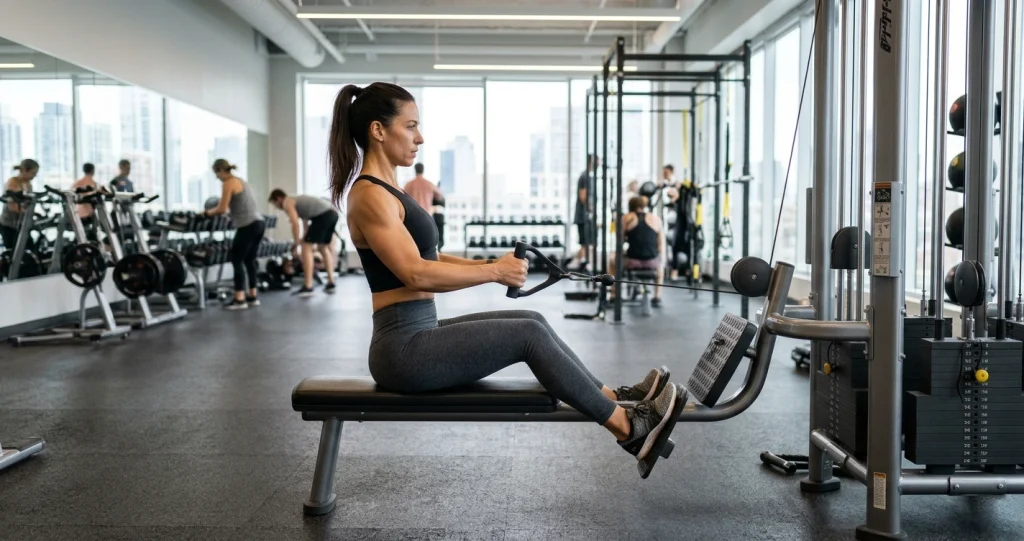
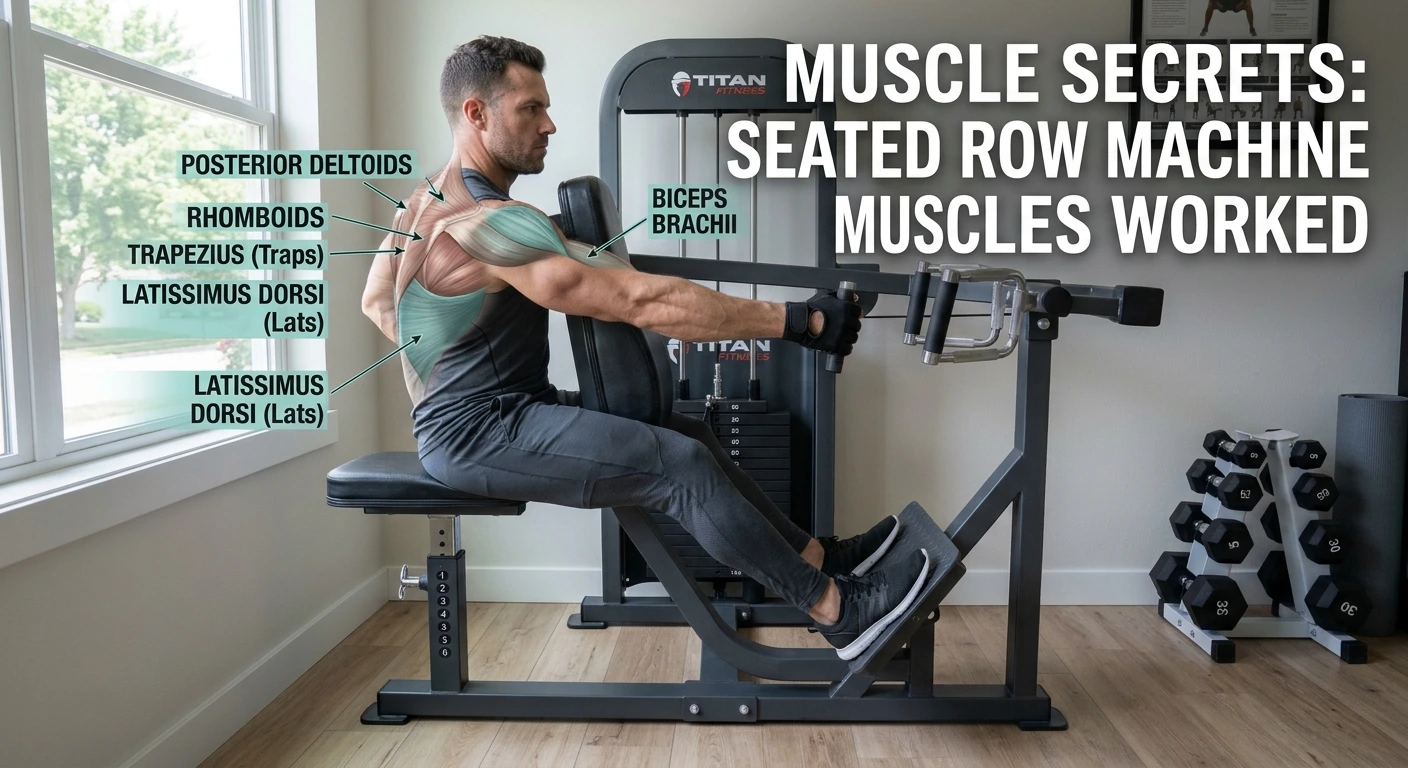
If you are looking to strengthen your back and improve your rowing technique, it’s essential to understand what muscles are engaged when the seated row machine is used. The seated row machine primarily focuses on developing the latissimus dorsi (lats), rhomboids, and trapezius (traps), with assistance from the biceps, rear deltoids, and forearms during each rep. Depending on the machine you use, your core and lower-back muscles might be involved in stabilizing your body.
The muscle(s) you are working may change based on your grip, elbow position, range of motion, and the machine you are using. This guide will teach you how the seated row machine targets different muscles, which grips engage the most, and how to perform the seated row exercise correctly.
Quick Answer: What Muscles Does the Seated Row Machine Work?
The seated row mainly works the lats, rhomboids, and trapezius. These muscles pull your upper arms back and control your shoulder blades. The biceps, rear delts, and forearms help. Your core and lower back keep you steady, especially on an unsupported cable row.
Your grip, elbow path, form, and the type of machine change which muscles do more work.
Key Takeaways
- The lats, rhomboids, and traps do most of the work.
- The biceps bend your elbows. The rear delts and forearms help you pull and hold.
- Your lower back works more on unsupported cable rows than on chest-supported machines.
- Grip and elbow position change the emphasis, but no grip isolates one muscle.
- Controlled reps beat swinging your body to lift heavier.
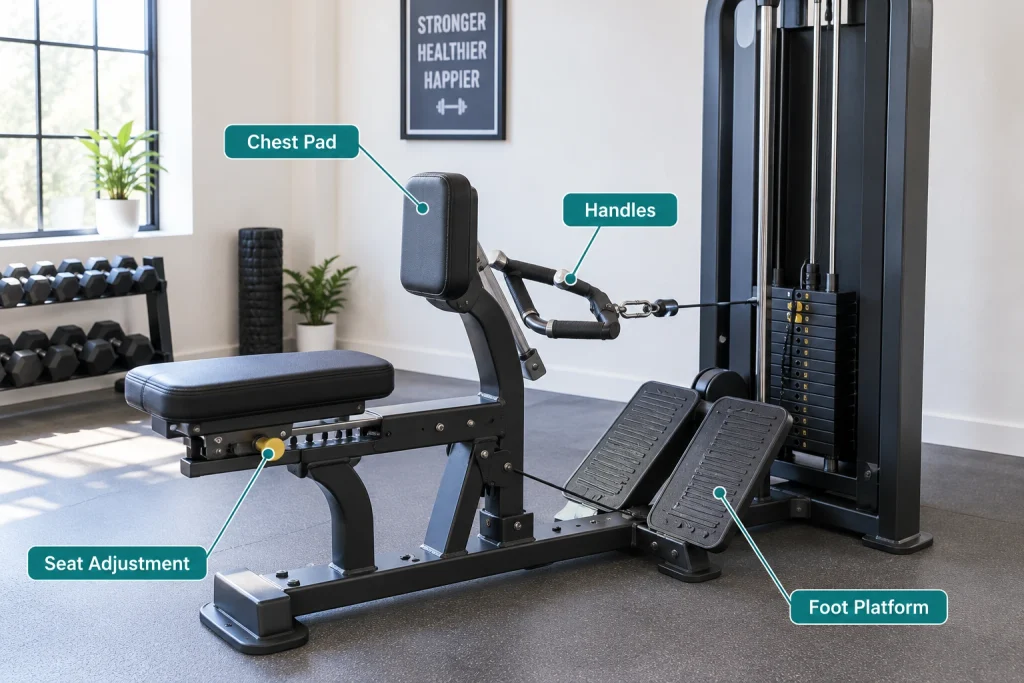
- Machine setup (seat, handles, chest pad) makes a big difference.
Seated Row Machine Muscles Worked: Primary Back Muscles
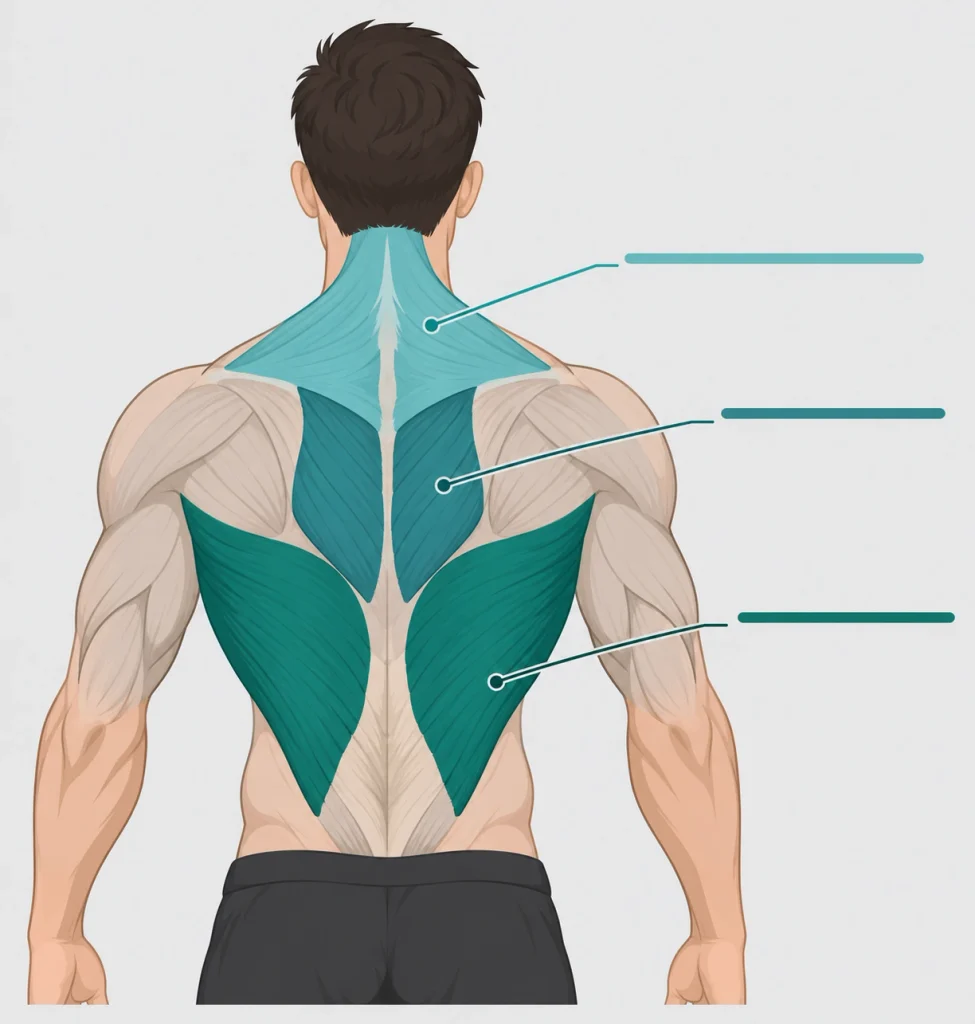
The seated row trains a horizontal pull. All the main back muscles work together as you draw the handles toward your body. Here are the big ones.
Latissimus Dorsi (Lats)
The lats are very large muscles that cover much of your middle and lower back and run up to your upper arm. During seated rows they pull your upper arm back toward your body.
Your lats work most when you pull the handles toward your belly or lower ribs. How much depends on the handle angle and your elbow position.
How to focus on your lats:
- Keep your elbows fairly close to your sides.
- Pull toward your lower ribs or upper stomach, whichever your machine allows.
- Keep your body steady. Do not lean far back.
- Use a comfortable range. Do not force your shoulders into a painful position.
- A neutral or close grip works well, but grip alone does not decide which muscle works.
Feeling a muscle burn is not always a reliable sign of how hard it works. Good form and the right weight give better results than chasing a certain feeling.
Rhomboids
The rhomboids sit between your shoulder blades and your spine. They help pull your shoulder blades toward each other. This is called scapular retraction.
They work during the pull and team up with the traps to control your shoulder blades. You do not need to squeeze your shoulder blades hard on every rep. Let them move naturally, think “elbows back,” and keep your shoulders away from your ears so the pull does not turn into a shrug.
Trapezius (Traps)
The trapezius is a large muscle on each side of your upper back and neck. It runs from the base of your skull, over your shoulders, and down to your mid-back. It has three parts, and each does a different job:
- Middle traps help bring your shoulder blades together.
- Lower traps help control and position your shoulder blades.
- Upper traps help steady your shoulder, but are not the main focus of most rows.
Keep your shoulders relaxed instead of lifting them toward your ears. Too much shrugging changes your movement and makes good form harder. The seated row is a great upper-back exercise, but it does not replace every other back or shoulder exercise.
Secondary Seated Row Machine Muscles Worked
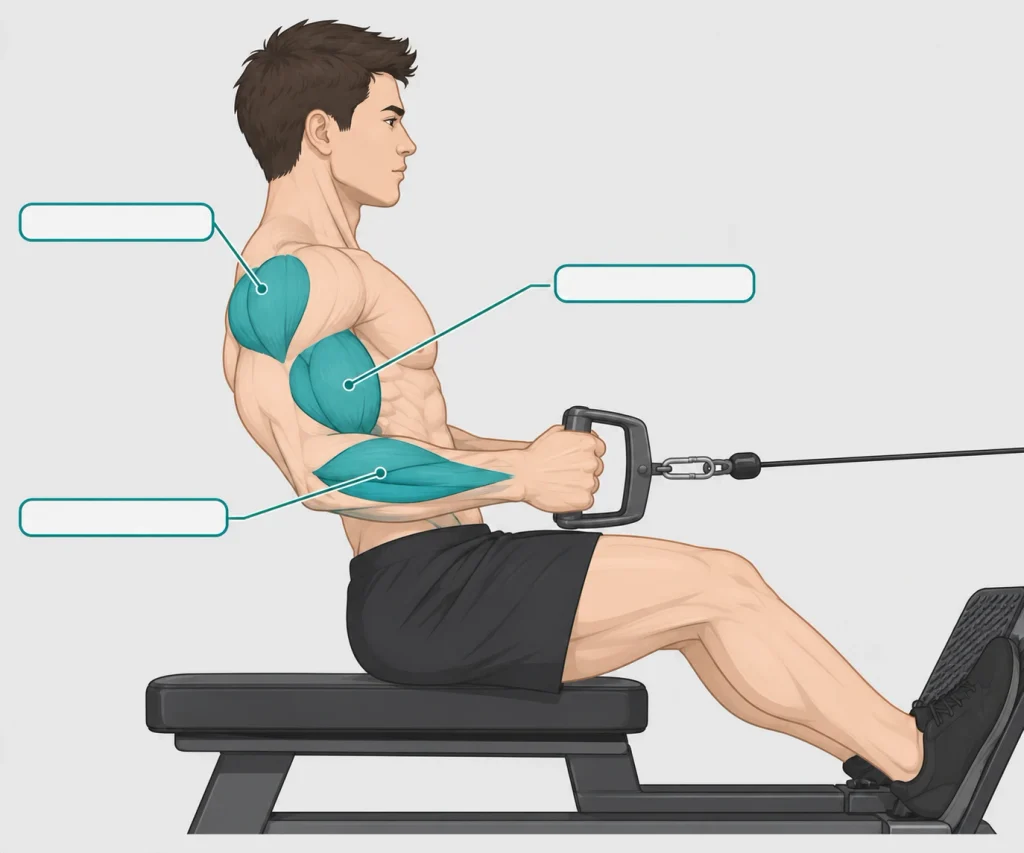
The back gets most of the credit, but other muscles help finish every rep.
Biceps
Your biceps are on the front of your upper arm. Their main job is to bend your elbow. When you pull the handles toward you, your elbows bend, so your biceps help. That is why you may feel your upper arms working.
You cannot turn the biceps off during a row, and you should not try. Just focus on moving your elbows back with control. Do not curl the handles up toward your shoulders, and do not bend your wrists too far.
If your arms get tired before your back, check three things: the weight, your grip, and your technique. Lowering the weight often helps you control the motion better.
Rear Deltoids
The rear delts are on the back of your shoulders. They help move your upper arm backward and outward. How much they work depends on your elbow path:
- Elbows closer to your sides usually put more focus on the lats.
- Elbows slightly wider usually put more focus on the rear delts and upper back.
Neither is better. The best choice depends on your goal, your comfort, and your equipment. If you want more upper back and rear delt work, use a comfortable, slightly wider elbow path. Do not flare your elbows out as far as possible.
Forearm Muscles
Your forearms help you hold the handles and control your wrists. If your hands and forearms tire quickly, grip strength may limit your set before your back gets enough work. To improve:
- Hold the handles firmly, but do not squeeze harder than needed.
- Keep your wrists neutral and comfortable.
- Do not let the handles bend your wrists into an awkward angle.
- Choose a weight you can control for the whole set.
Handle shape changes comfort and grip. If you are choosing a machine for your home gym, look at the handle design as well as the seat adjustments and build quality.
Core Muscles
Your abs and the muscles around your trunk help keep your body steady. How much they work depends on the support you get. On an unsupported seated cable row, your trunk has to hold you in place against the cable. On a chest-supported machine, you need far less trunk stability.
So your core helps, but the seated row is not mainly an ab exercise. Its main action is a horizontal pull.
Does the Seated Row Machine Work Your Lower Back?
Your lower back helps keep you stable, but how much depends on the machine and how you use it. The spinal erectors hold your spine in position and control your trunk. On an unsupported cable row, they help keep your torso steady while you pull. On a chest-supported machine, the pad holds your upper body, so your lower back works less.
Is the seated row a lower-back exercise? No. It mainly builds the upper and middle back, plus the arms and helper muscles. If you want to build lower-back strength, other exercises do that better.
To keep your lower back comfortable:
- Adjust the machine so you can reach the handles without rounding your back.
- Keep a natural, comfortable spine position.
- Do not rock your body to move the weight.
- Lower the weight if you cannot control the movement.
- Stop if you feel sharp or unusual pain.
A little natural body movement can happen on cable rows. But too much swinging is not a replacement for a controlled pull.
How Different Grips Change Muscle Emphasis
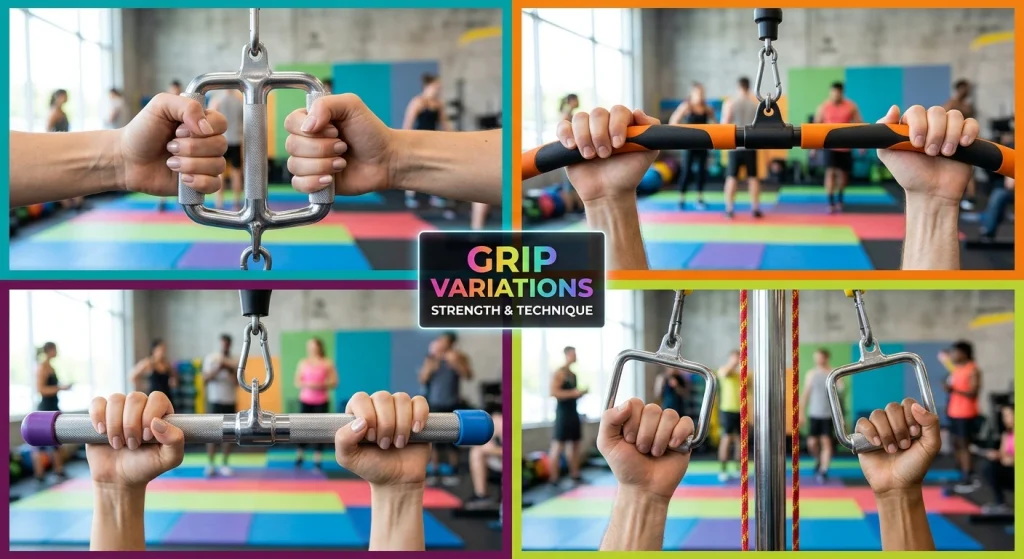
Your grip changes where your elbows can go and how the exercise feels. But no grip completely isolates one muscle. Other things also matter, like the machine design, your body proportions, your range of motion, and the way the machine applies resistance.
| Grip | What happens | Good to know |
| Close neutral (palms face each other) | Elbows stay near your sides | Often used to focus on the lats and other back muscles |
| Wide | Elbows move farther from your body | Upper back and rear delts may work more |
| Pronated (palms down) | Arm and elbow position changes with the handle | Can change how your upper arms and shoulders move |
| Independent handles | Each arm moves on its own path | Lets each side work separately |
These patterns are general, not strict rules.
Close-Grip Seated Row
A close grip usually lets you pull with your elbows near your body. It is a good way to target the lats in a safe, comfortable range. Do not clamp your elbows tightly to your sides. Let them move smoothly.
Wide-Grip Seated Row
A wide handle encourages a wider elbow path. This may add more work for the rear delts and upper back. But wider is not always better. Choose a wider grip because it is comfortable and fits your goal, not because you think it works the whole upper back better.
Independent-Arm Seated Row
Some machines have separate handles for each arm. This helps you notice differences between your left and right sides. Use a weight you can control, move each handle smoothly, and do not twist your body or let one side finish faster. Beginners do not need separate handles, but some people find them useful.
Seated Cable Row vs. Chest-Supported Row: Which Muscles Work?
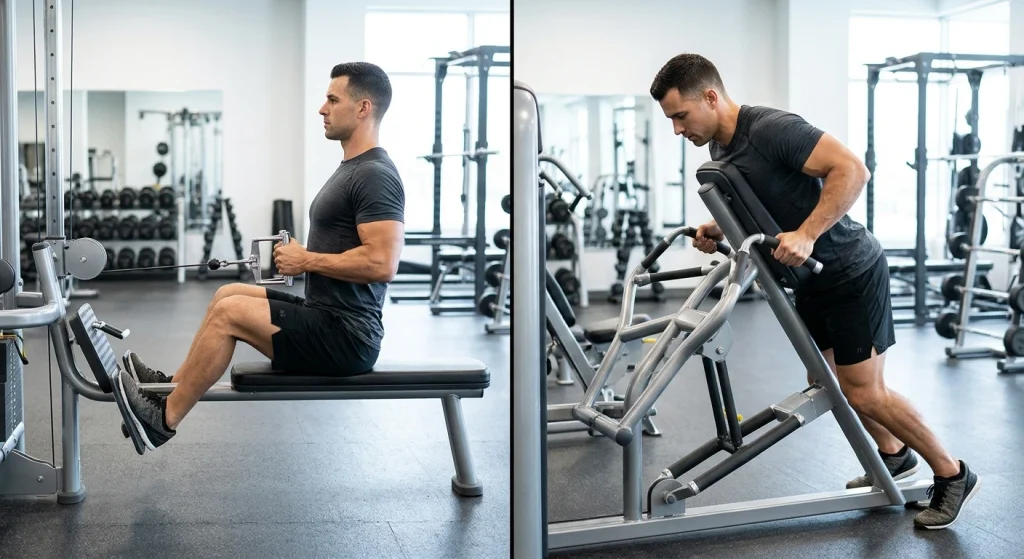
Both are horizontal pulls, but they support your body differently.
Seated Cable Row
A regular seated cable row has a foot platform and a cable attachment. You sit upright and pull the handle toward you. The lats, rhomboids, traps, biceps, rear delts, and forearms all work. Your trunk muscles also work to hold you steady, because nothing supports your chest. This style offers many handle choices and natural movement, as long as the machine is set up correctly.
Chest-Supported Row Machine
This machine has a pad that supports your upper body while you pull. Your back and arm muscles still do the main pulling, but you need less trunk stability. This can help beginners keep good form. It can also help experienced lifters focus on the pulling muscles with less need to stabilize their trunk.
Which One Should You Choose?
Both have advantages. Choose based on your goals, your space, your experience, and what feels best to you. If you are buying for a home gym, ask yourself:
- Adjustability: can you adjust the seat and foot platform so you can reach the handles easily?
- Handle options: does it support the grips you want to use?
- Chest support: would a pad make it easier to hold your position?
- Range of motion: can you straighten your arms and pull back comfortably, with no strain on your shoulders?
- Resistance: is the starting weight manageable, and can you add more as you get stronger?
- Build quality: will the frame, moving parts, and spare parts last with regular use?
These practical details matter more than a product description saying it works extra muscles.
How to Use the Seated Row Machine for Better Results
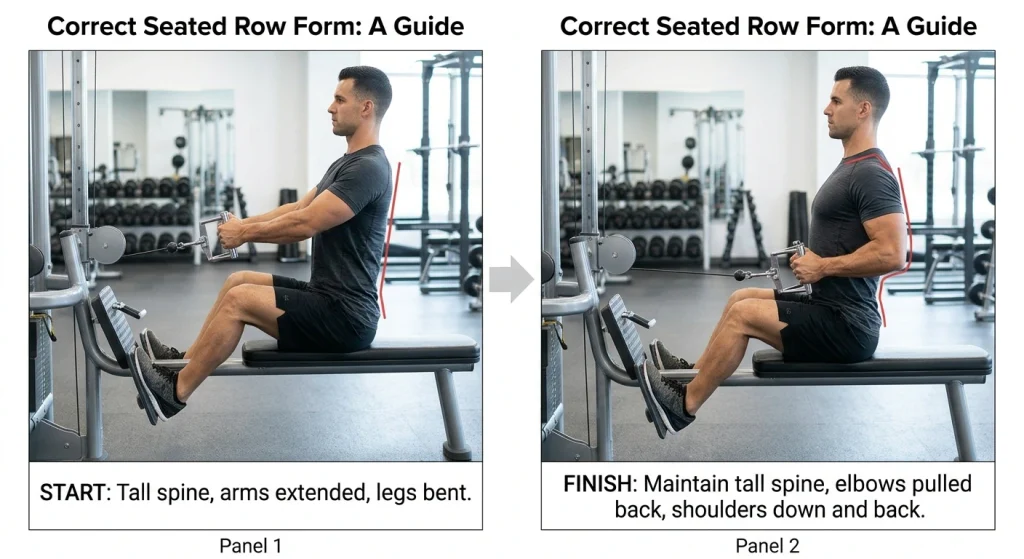
Knowing the muscles is only part of the picture. Your setup and technique decide how well you train them.
Step 1: Adjust the seat and foot position. Put your feet firmly on the platform (if there is one). Adjust the seat so you can reach the handles without overstretching or rounding your back. Keep your knees slightly bent, not locked. Follow the maker’s instructions, especially if your machine has a chest pad or separate arms.
Step 2: Choose a weight you can control. If you need to lean back to finish the pull, or you struggle to return the handles, the weight is too heavy. Start lighter, build your technique, and add weight slowly.
Step 3: Start with your arms comfortably straight. Reach as far as feels comfortable. Do not force your shoulders into a stretch, do not round your back, and do not lock your elbows hard.
Step 4: Pull the handles toward your body. Guide your elbows back behind you. Keep your shoulders relaxed and your wrists comfortable. Think “elbows back,” not just “hands back.” You do not need a hard shoulder blade squeeze.
Step 5: Return the weight slowly. Move your hands forward in a steady motion. Do not let the weights crash or the cable yank you forward. Control the return as much as the pull.
Step 6: Keep your body steady. Stay upright and do not lean back too far. On an unsupported cable row, keep your upper body stable on every rep. If you rock, lower the weight and try again.
Step 7: Progress slowly. Beginners can start with 2 to 3 sets of 8 to 12 slow, controlled reps, then adjust based on their program and recovery. When you can finish every set with steady form, add a small amount of weight. Progress is not about how much weight you load. It is about steady improvement with good form.
Common Seated Row Mistakes to Avoid
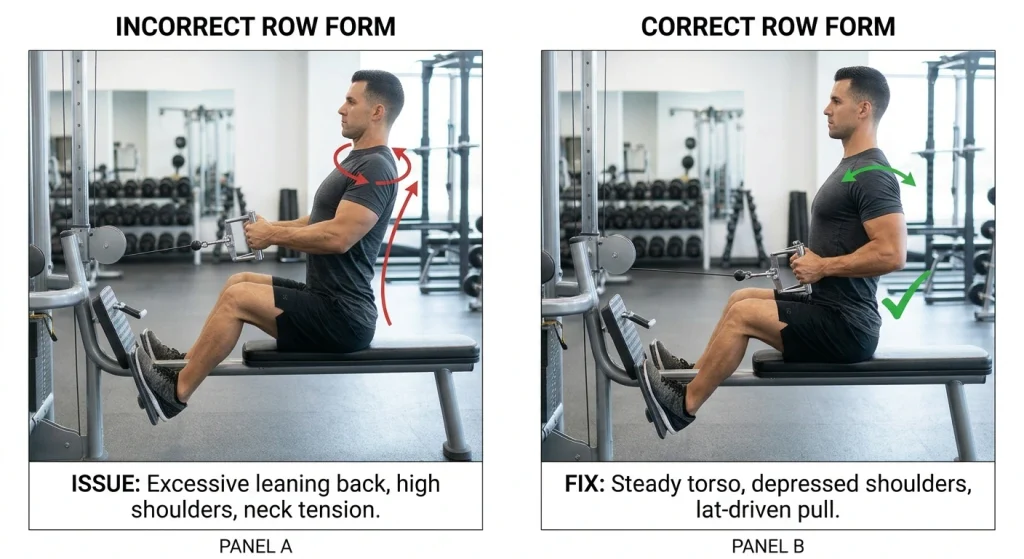
Even the best machine cannot fix poor technique. Watch for these common beginner mistakes.
Leaning too far back. This turns the row into a rocking motion and changes which muscles work. Fix: keep your body steady and use a weight you can pull without momentum.
Rounding your back. Leaning too far forward makes it hard to find a comfortable position. Fix: change your seat or starting position so you can reach the handles without strain.
Shrugging your shoulders. Lifting your shoulders toward your ears changes your pull and makes control harder. Fix: keep your neck relaxed and shoulders down.
Pulling only with your hands. The row starts to feel like an arm exercise. Fix: guide your elbows back with your shoulders relaxed.
Using too much weight. If you cannot control the pull and the return, it is too heavy. Fix: lower the weight, use a comfortable range, and add weight slowly as you gain control.
Rushing the return. Letting the weight pull your arms forward fast means you lose control. Fix: return the handles smoothly and do not let the stack slam.
A good rule: if you need momentum to finish each rep, the weight may be too heavy or the machine may be set up wrong. Check both before you make the workout harder.
Benefits of Training With the Seated Row Machine
As part of a balanced strength program, seated rows offer many practical benefits:
- Builds back strength: it trains the muscles used for horizontal pulling. Train regularly and add weight as you improve.
- Supports upper-back development: the traps and rhomboids help control your shoulder blades, and training them is part of a complete upper-back plan.
- Trains the arms with the back: it is a compound exercise, so your biceps and forearms help you pull and hold.
- Adjustable resistance: you can start light and add small amounts of weight over time.
- Different setup options: depending on the model, you may get different handles, adjustable seats, separate arms, or chest support.
- Fits many programs: it pairs well with vertical pulls like lat pulldowns, pressing exercises, and other upper-body work. It does not have to be your main back exercise to be useful.
Keep your expectations realistic. One exercise alone will not fix your posture, prevent injuries, or build muscle. You need a full routine, enough recovery, and regular training.
Final Thoughts
The seated row machine is a great way to strengthen the upper back, mainly the lats, rhomboids, and traps. Your biceps, rear delts, and forearms help finish each rep, and depending on the machine, your trunk helps keep you steady.
The best way to train is with a natural position, a weight you can control, and slow, deliberate reps. Pay attention to where your elbows go and how you grip, but remember there is no single right grip for everyone.
If you are buying a machine for your home gym, look at adjustability, handle options, chest support, resistance range, and build quality, not just the number of muscles it claims to work.
The main point: learn which muscles you are training, learn to move well, and build strength slowly. Steady, planned training beats lifting as much as possible or hunting for quick fixes.
What muscles does the seated row machine work most?
The lats, rhomboids, and traps. The biceps, rear delts, and forearms help. Depending on the machine, your core and lower back help keep you steady.
Does the seated row machine work the lats?
Yes. The lats pull your upper arms back toward your body. Keeping your elbows close to your sides usually adds more lat work, but it also depends on the machine and your form.
Does the seated row machine work the upper back?
Yes. The rhomboids and middle traps help control and pull your shoulder blades back. The rear delts may work more if your elbows move farther from your body.
Does the seated row machine work the lower back?
Your lower back helps keep you steady on unsupported cable rows. On a chest-supported machine it works much less. The seated row is mainly an upper-back exercise, not a lower-back exercise.
Does the seated row machine work the biceps?
Yes. Your biceps help bend your elbows as you pull. But the seated row is mainly a back exercise, so it does not replace direct biceps training.
Which grip is best for targeting the lats?
A close, neutral grip with your elbows nearer your body helps focus on the lats. But no grip isolates the lats. Choose a handle that gives you a comfortable, controlled range.

One Comment