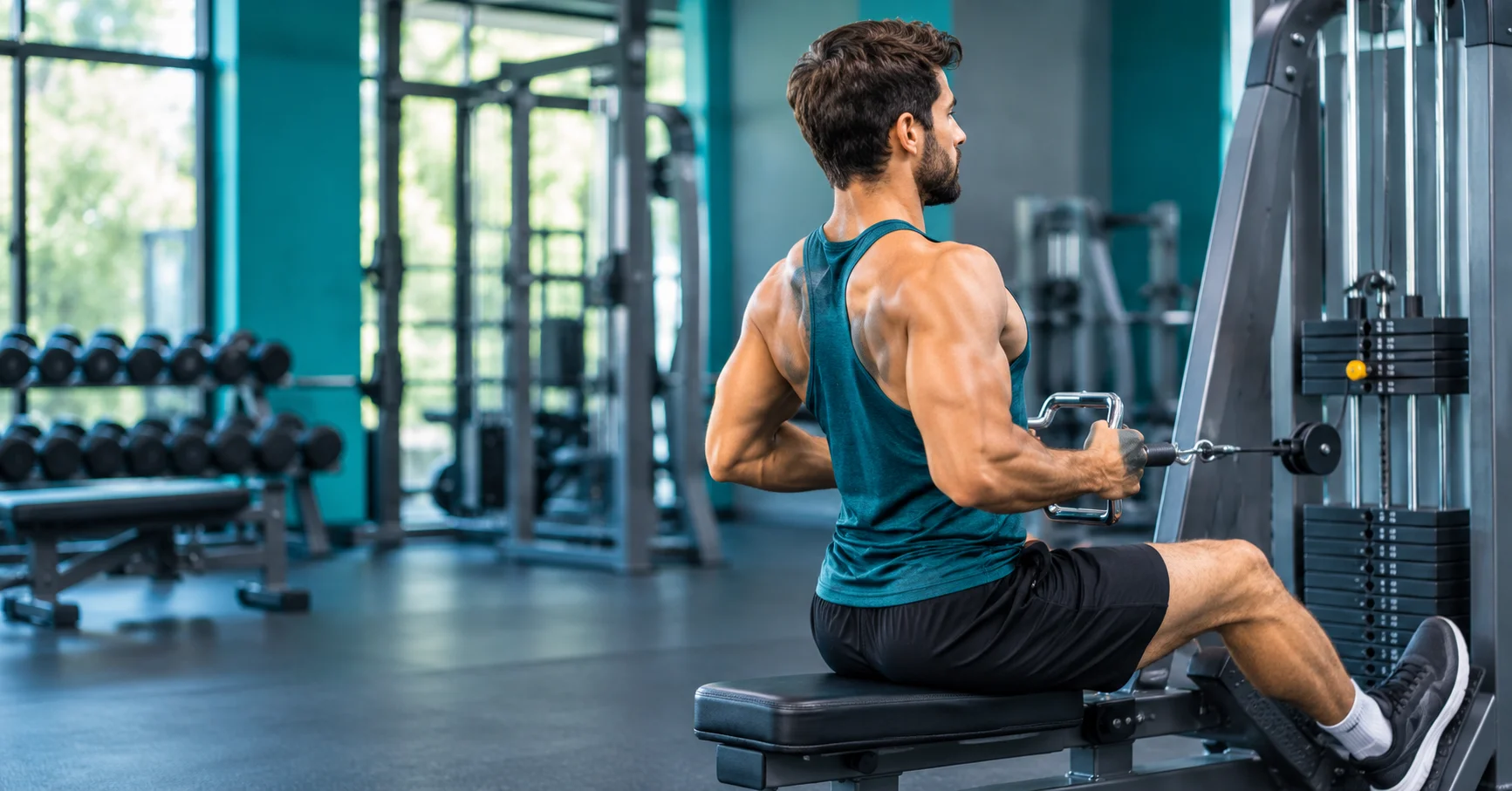
Build a Stronger Back: 9Benefits of Seated Row Machine
Benefits of Seated Row Machine for a Stronger Back
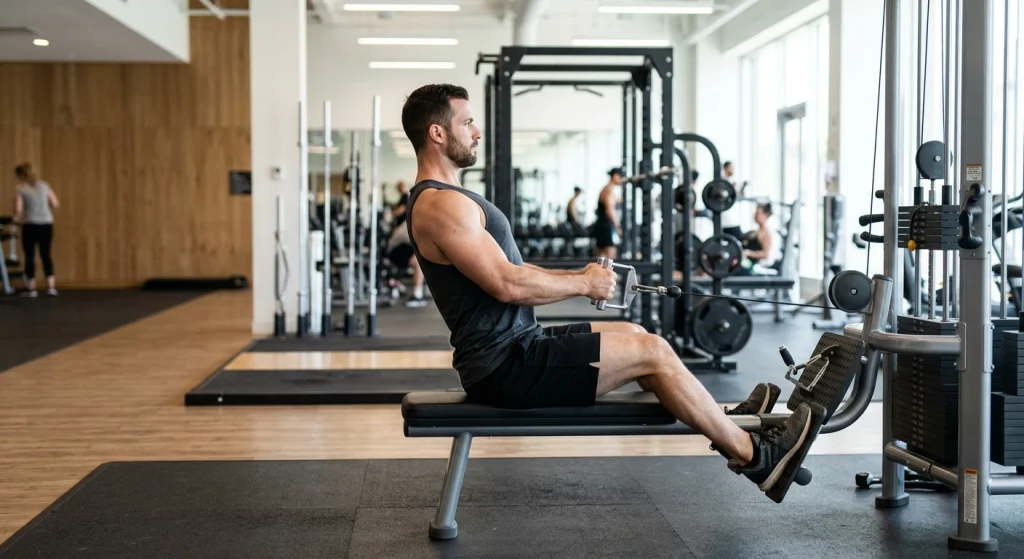
You will find a seated row machine in almost every gym. It does not look as exciting as a heavy barbell, but it is one of the easiest and safest ways to build a strong back.
Here is why people like it. You sit down, set the seat, pick a weight, and pull. You do not have to balance a heavy bar, so you can focus on your back muscles. But just pulling the handle is not enough. Your form, your control, and how often you train decide your results.
In this guide you will learn 9 benefits of the seated row machine, the muscles it works, how to do it correctly, common mistakes, and a simple plan for beginners.
Quick Answer
The seated row machine makes your back stronger, works your arms and shoulders at the same time, builds pulling strength, and is easy for beginners to learn. You can also track your progress easily.
Key Takeaways
• Seated rows build back strength.
• They work your lats, rhomboids, and traps. Your biceps and rear shoulders help.
• Slow, controlled reps are better than heavy, messy reps.
• Different handles change how the exercise feels.
• Use rows together with other exercises for a balanced routine.
What Is a Seated Row Machine?
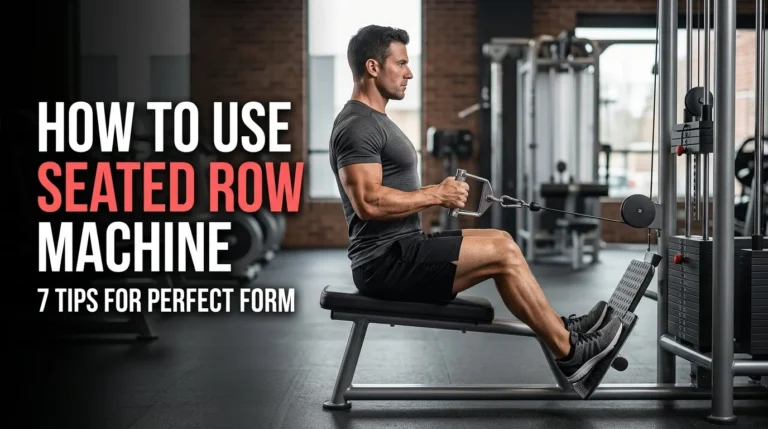
A seated row machine lets you pull a weight toward your body while you sit. The weight may come from a cable and weight stack, plates, or a lever arm.
You start with your arms straight in front of you. Then you pull your elbows back, bring the handles to your body, and slowly return. This is a “horizontal pull” (straight back). A lat pulldown is a “vertical pull” (from above). Both work the back, just from different angles.
Some machines have a chest pad. Some do not. The goal is the same: use your back and arms to move the weight, not your body swing.
Benefits of Seated Row Machine: 9 Powerful Reasons
slowly. If you have to lean back or jerk to finish a rep, the weight is too heavy.
2. Works many upper-body muscles at once
Your back does most of the work. Your biceps bend your elbows, your rear shoulders pull your arms back, and your forearms hold the handle. This makes the seated row a “compound” exercise. It cannot replace chest, triceps, or leg exercises, so use it as one part of your plan.
3. Helps your back muscles grow
Muscles grow when you train regularly, eat well, and rest enough. The seated row lets you add weight step by step. If you can do 12 clean reps, you can add a little weight. Results take weeks and months, not days.
4. Builds useful pulling strength
Pulling strength helps in many other exercises, such as cable rows and lat pulldowns. If you are new, focus on clean reps first. You do not need heavy weight to get a good workout.
5. Easy for beginners
A gym can feel scary at first. The seated row is a simple place to start: sit, adjust, choose a weight, and pull. You do not need to hold a barbell or bend over. But a machine does not guarantee good form. If you are not sure about the setup, ask a certified trainer.
6. Teaches controlled movement
Both parts of the rep matter: the pull and the return. When you let the weight snap the handles forward, you lose control. Pull smoothly and return slowly. Do not bounce, jerk, or rush. The same path every rep also shows you when your form starts to slip.
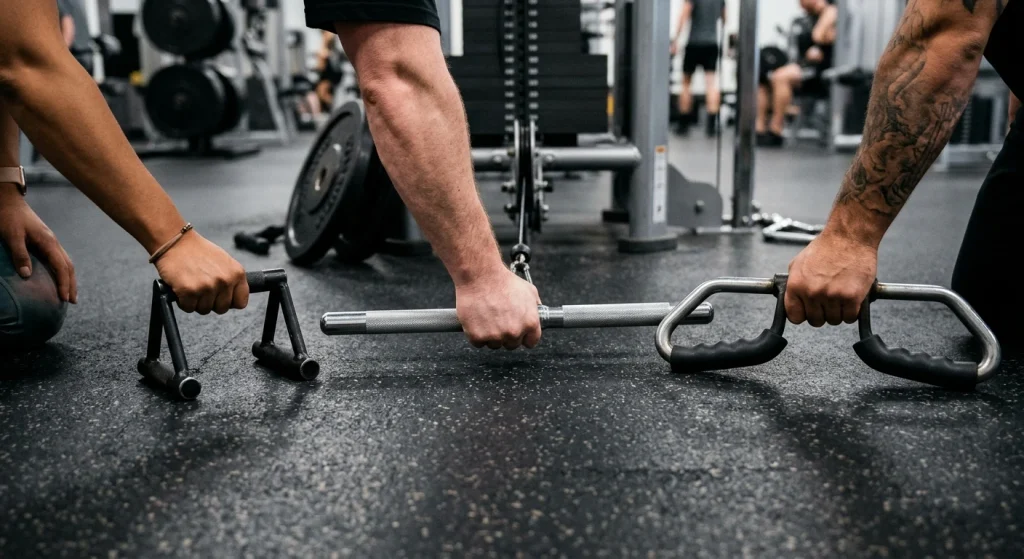
7. Gives you different grip options
Common handles are a narrow neutral grip (palms face each other), an overhand grip (palms face down), and a wide handle. Each one changes how the exercise feels, but no grip works only one muscle. Most beginners start with a close neutral grip. Choose what feels comfortable, and never force a grip that hurts.
8. Fits into any workout plan
Beginners can add it to a full-body workout with a leg exercise and a chest press. Others can use it in an upper-body day with pulldowns, chest, and shoulder work. Tracking is easy: write down your weight, sets, and reps. If you do the same reps with a bit more weight after a few weeks, you are improving.
9. A good alternative to heavy free-weight rows
Free-weight rows are great, but you must balance the weight and hold a bent-over position. The seated row machine takes that away. Many machines also have chest support. Just make sure the machine fits your body and feels natural.
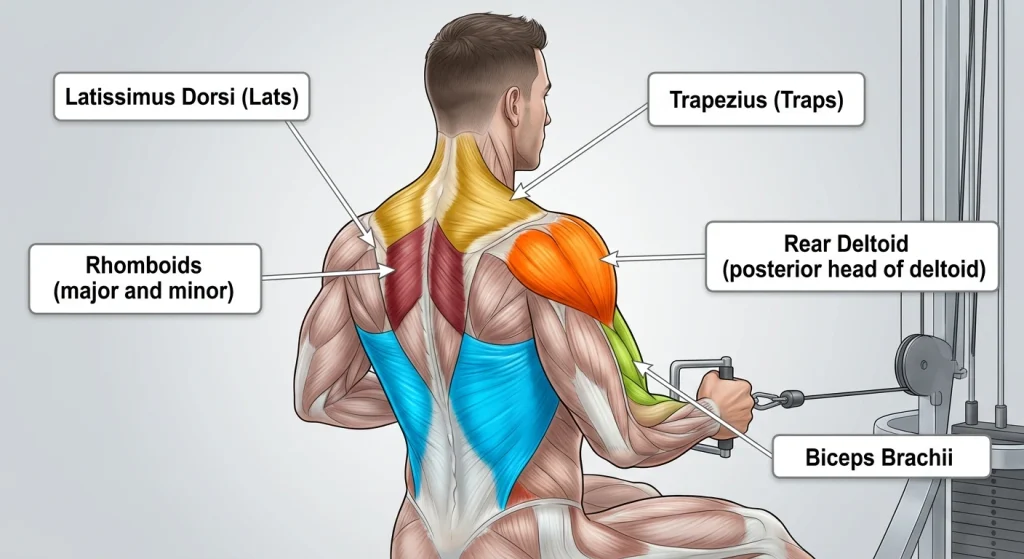
What Muscles Does a Seated Row Machine Work?
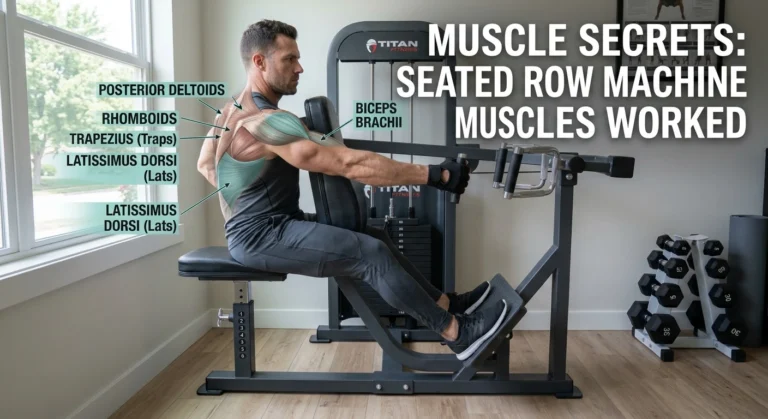
• Latissimus dorsi (lats): big back muscles that pull your arms back.
• Rhomboids: between your shoulder blades; they squeeze the blades together.
• Trapezius (traps): upper back and neck muscle that moves your shoulder blades.
• Rear deltoids: the back of your shoulders; they help pull your arms back.
• Biceps: bend your elbows as you pull.
• Forearms: help you hold the handle.
Your core also keeps your body steady, but seated rows are not a full core or lower-back workout.
How to Use a Seated Row Machine Correctly
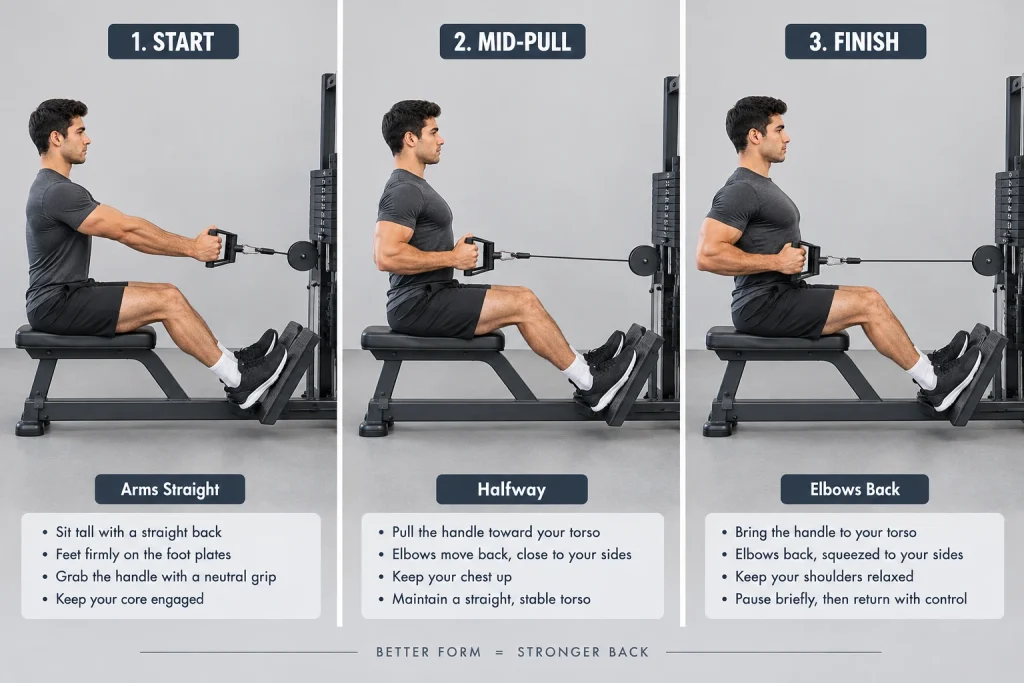
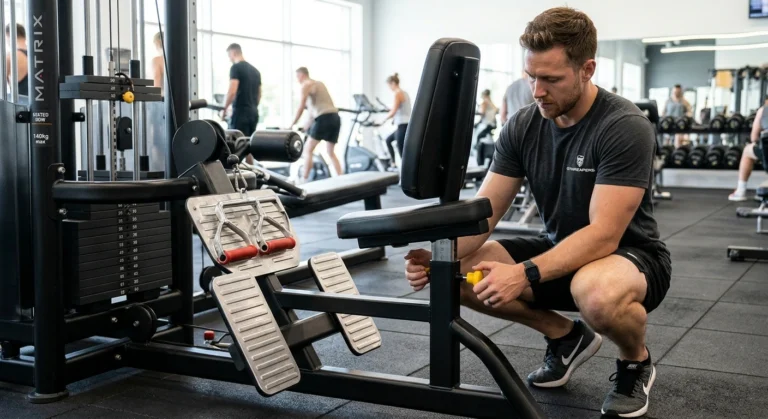
Step 1: Adjust the seat and foot supports. You should reach the handles without leaning too far forward or rounding your back. Set the chest pad if your machine has one.
Step 2: Choose a weight you can control. Do not pick your maximum weight.
Step 3: Sit steady. Put your feet on the supports, keep your knees slightly bent, and keep your back straight.
Step 4: Pull. Drive your elbows back and bring the handles toward your lower chest. Keep your shoulders relaxed. Do not swing backward.
Step 5: Return slowly. Straighten your arms under control. Let your shoulders move forward naturally.
Step 6: Repeat with the same form. If you rock, shrug, or jerk, lower the weight or stop the set.
Good starting point for beginners: 2 to 3 sets of 8 to 12 reps.
Common Mistakes That Slow Your Progress
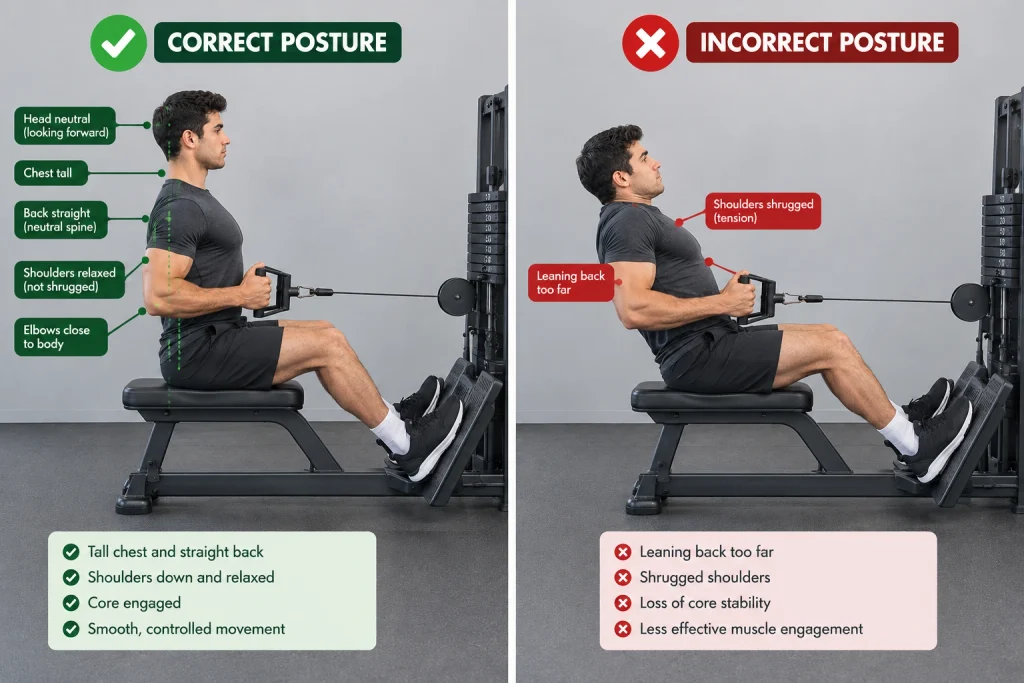
• Using too much weight: if you cannot control it, make it lighter.
• Leaning too far back: this uses momentum instead of your back.
• Rounding your back: move your seat or starting position so you begin comfortably.
• Shrugging your shoulders: keep them away from your ears.
• Letting the weight snap back: slow it down on the way back.
• Rushing: fast reps ruin control and form.
Seated Row Machine vs. Other Back Exercises
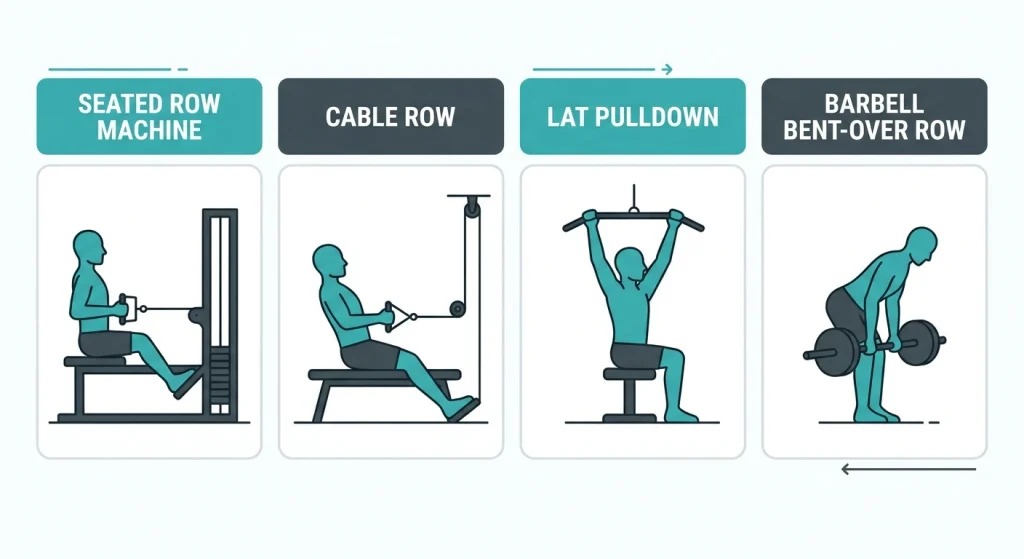
| Exercise | Main benefit | Good to know |
| Seated row machine | Guided, repeatable horizontal pull | Machine must fit your body |
| Seated cable row | More freedom of movement | You must keep your body steady |
| Lat pulldown | Vertical pull, pairs well with rows | Works the back from above |
| Bent-over barbell row | Free weight, whole-body control | Needs more skill and balance |
| Chest-supported row | Supports your body while you pull | Machines vary |
Machine vs. cable row: the machine has a fixed path, and the cable gives more freedom. Neither is always better. Pick what feels best and keeps your form good.
Row vs. lat pulldown: rows pull straight back, pulldowns pull down from above. Using both adds variety.
Machine vs. bent-over row: the machine is easier to set up for new lifters, but free-weight rows are still useful later.
How Often Should You Use the Seated Row?
Most beginners can train their back 1 to 2 times per week. A simple plan:
• Workout 1: seated row, 2 to 3 sets of 8 to 12 reps.
• Workout 2: another pulling exercise, like a lat pulldown.
Add reps or weight only when your form stays good. If you feel very tired or sore all the time, rest more. You do not need to train the same muscles hard every day.
Is the Seated Row Machine Good for Beginners?
Yes, for most people. The weight is easy to change, the movement is simple, and progress is easy to track. Remember three things:
• Learn the setup first.
• Practice smooth reps before adding weight.
• Add weight slowly, only when the current weight feels easy to control.
Compare yourself only with your own starting point, not with other people.
Final Thoughts
The seated row machine is a simple, effective way to build back strength, work many muscles, and learn to pull with control. Beginners find it easy to start, and experienced lifters can use it in many programs.
The secret is simple: choose a weight you can control, keep your form clean, and add challenge slowly. Combine rows with other exercises and enough rest. You do not have to train hard every day. Stay consistent and the results will come.
What are the biggest benefits of seated row machine workouts?
They build back strength, work many upper-body muscles together, teach a straight-back pulling motion, and make progress easy to track. Your results depend on your form, weight, consistency, and rest.
Does the seated row machine build a bigger back?
Yes, with steady progress, good food, and enough rest. No single exercise can do it alone.
Is the seated row machine better than free weights?
Not always. Free weights need more balance and control. Machines are more guided. Choose based on your goals and experience.
Can seated rows improve posture?
They strengthen the muscles that pull your shoulders and arms back, which can help. But posture depends on many things, so rows alone will not fix everything.
What is a good starting weight?
It is different for everyone. Pick a weight that lets you finish every rep with control and no pain.
How many sets and reps should I do?
Beginners can start with 2 to 3 sets of 8 to 12 reps, then adjust as they improve.
Can I do seated rows every day?
You usually do not need to. Give your muscles time to recover between hard workouts.
Are seated rows enough for a full back workout?
They are a big part, but a full routine also includes other pulls, like lat pulldowns.
Which grip is best for seated rows?
The one that feels comfortable and controlled. Many people start with a close neutral grip.